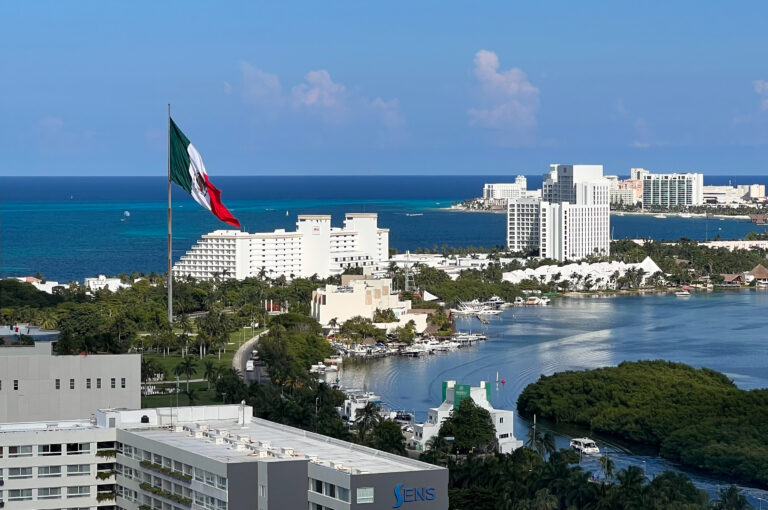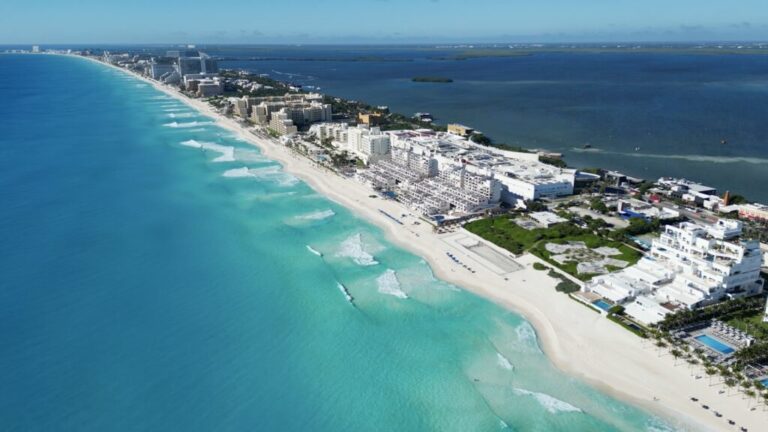

Choosing where to live in Cancun isn’t so much about finding the best neighborhood as deciding what matters most to you. If convenience and access to everyday services are your priorities, Downtown Cancún, particularly around Plaza Las Américas, is a good place to start. If you prefer newer homes and gated communities, Cumbres and the Avenida Huayacán corridor deserve a look, especially if you own a car. And if your budget stretches to waterfront living, Puerto Cancún and the Hotel Zone offer something quite different.
But there’s a catch. A neighborhood that looks fantastic on a property listing doesn’t necessarily make everyday life convenient. That beautiful house in a gated development might mean driving almost everywhere. Meanwhile, a less glamorous apartment downtown could put supermarkets, restaurants, banks, and other essentials within walking distance. Neither is automatically the better choice.
We live in Cancún, and we’ve put together this guide to help you look beyond the beaches, swimming pools, and glossy real estate advertisements. We’ll explore the city’s main residential areas, compare their advantages and drawbacks, and discuss the practicalities of renting, transportation, safety, and daily life.
By the end, you’ll have a much better idea of which parts of Cancún are worth exploring before committing to a place to live.
A quick look at where each area stands out and what you might have to compromise on.
| Residential area | Why consider it | What to watch for |
|---|---|---|
|
Downtown / Centro
|
Everyday services, restaurants, local shops and public transportation. | Street noise, traffic and substantial differences in building condition. |
|
Plaza Las Americas / Malecon
|
Central condominiums, shopping, supermarkets and convenient services. | Busy avenues and property-specific maintenance or noise issues. |
|
Puerto Cancun
|
Upscale waterfront condominiums, marina amenities and shopping. | Premium housing costs, maintenance fees and travel beyond the development. |
|
Hotel Zone
|
Beach access, condominiums and bus connections along Boulevard Kukulcan. | Tourist traffic, housing costs and longer journeys for some everyday errands. |
|
Residencial Cumbres
|
Established private communities, green spaces and residential houses. | A car is useful for many errands; rules and fees vary by development. |
|
Avenida Huayacan
|
Newer residential developments, gated communities and growing commerce. | Spread-out services, traffic and dependence on personal transportation. |
|
Jardines del Sur / Gran Santa Fe
|
Residential houses and neighborhood amenities across different budgets. | Commute times and public transportation depend heavily on the exact development. |
|
Puerto Juarez
|
Coastal residential character, local seafood restaurants and ferry access. | Fewer large shopping options nearby and extra coastal property upkeep. |
|
Northern / outer residential areas
|
A wider range of housing types and potentially more affordable options. | Services, infrastructure and transport vary significantly between locations. |
These are broad editorial comparisons, not official neighborhood boundaries or safety rankings. Individual streets and developments can differ substantially.
Hover over a shaded area to see its name. Click or tap to discover the lifestyle and practical trade-offs. You can also choose an area from the list.
An established part of the city with shops, services, restaurants and public transport options.
Consider: Street noise, traffic and building-by-building differences.
Understanding Cancún’s Geography Before Choosing Where to Live
If your experience of Cancún is limited to vacations, you might picture a long stretch of beaches, hotels, and turquoise water. But that’s only a small part of the city. Most of Cancún’s residential life takes place on the mainland, and understanding how the city is laid out can save you from choosing a home that looks perfect on paper but proves inconvenient in practice.
The easiest way to make sense of Cancún is to think of it in three broad areas.
The Hotel Zone (Zona Hotelera) is the famous strip of land between the Caribbean Sea and Nichupté Lagoon. This is where you’ll find most of the major beachfront resorts, along with residential condominiums. Living here puts you close to the beaches, but many ordinary errands will involve traveling into the city.
Downtown Cancún (Centro) is the mainland’s established urban core, where you’ll find residential streets, supermarkets, hospitals, shopping centers, restaurants, and other everyday services. Areas around Plaza Las Américas and Malecón Cancún offer a different living experience from the older neighborhoods around Parque de las Palapas. Puerto Cancún sits near the entrance to the Hotel Zone, while Puerto Juárez extends along the coast farther north.
Southern and southwestern Cancún contain many of the city’s residential developments, including Cumbres, communities along Avenida Huayacán, Jardines del Sur, and Gran Santa Fe. Some offer newer houses, gated entrances, and shared amenities. However, the distance between your home and everyday destinations becomes particularly important here, especially if you don’t own a car.
There’s another detail worth knowing when searching for property. Cancún addresses frequently use Supermanzana (SM) numbers, which identify sections
Downtown Cancún: Is Living in the City Center Worth It?
Downtown Cancún might not be what you imagined when you decided to move to the Caribbean. There are no turquoise waters outside your window, the architecture is a mixed bag, and some streets could certainly use a little attention. But what Centro lacks in beachfront glamour, it makes up for in something arguably more valuable when you’re actually living here: everyday convenience.
This is where much of Cancún’s ordinary city life happens. Supermarkets, banks, medical services, local restaurants, markets, and independent businesses are scattered throughout the central neighborhoods. Depending on exactly where you live, you might be able to take care of most everyday errands without getting into a car.
And that can make a surprisingly big difference to your quality of life.
Not All of Downtown Cancún Is the Same
One of the mistakes newcomers make is treating Downtown Cancún as a single neighborhood. In reality, it covers quite different residential environments.
Around Avenida Nader and Parque de las Palapas, you’ll find some of the city’s older, more established streets, with low-rise apartment buildings, houses, restaurants, and small businesses. Parque de las Palapas is also one of Cancún’s traditional gathering places, particularly lively in the evenings when families come out for food and entertainment.
Move toward Avenida Bonampak, Plaza Las Américas, and Malecón Cancún, and the surroundings change. You’ll encounter more modern condominium buildings, major commercial developments, and busier thoroughfares. We’ll examine this part of the city separately because it deserves particular attention from anyone considering a long-term rental.
Even within the older residential Supermanzanas, one street can feel remarkably different from another. A house tucked away on a quiet, tree-lined street may offer a pleasant residential setting, while an apartment facing a busy avenue could expose you to traffic and noise throughout the day.
The exact address matters more than the Downtown label on a property listing.
Could You Live Here Without a Car?
This is one of Downtown’s strongest selling points.
Cancún’s public transportation network connects many central areas with the Hotel Zone and other parts of the city. The main ADO bus terminal is also downtown, making intercity travel to destinations such as Playa del Carmen, Valladolid, and Mérida more accessible without owning a vehicle.
However, don’t confuse having good transport connections with being able to walk everywhere. Cancún isn’t particularly pedestrian-friendly in many places. Wide avenues, uneven sidewalks, intense sunshine, and tropical downpours can turn an otherwise short walk into an unpleasant experience.
Our advice is to look beyond the distance shown on Google Maps. Before renting, check whether you’ll need to cross major roads to reach your supermarket, where the nearest useful bus stop is, and whether you’d actually be comfortable walking that route regularly.
The Trade-Off: Convenience Versus Comfort
Downtown offers a broad mix of housing, from modest studios and older apartments to spacious houses and newer condominiums. That variety gives you more opportunities to find something that suits your budget, although rental prices and property conditions differ considerably.
The trade-offs are worth taking seriously.
Older properties may need closer inspection, particularly when it comes to air conditioning, plumbing, water pressure, electrical installations, and general maintenance. Street noise, limited parking, and traffic can also become frustrating, depending on where you settle.
And while you’ll have plenty of restaurants, shops, and services nearby, you won’t necessarily enjoy the landscaped grounds, swimming pools, or controlled-access environments commonly associated with newer gated developments.
Our verdict: Downtown Cancún is well worth considering if you value convenience, prefer having businesses and services nearby, and don’t want every outing to require a car. It’s especially worth exploring before committing to a newer development farther from the city center.
But if you like the idea of a central location and also want a modern apartment building with residential amenities, there’s another area we would put high on your shortlist: the neighborhoods around Plaza Las Américas and Malecón Cancún.
Living Near Plaza Las Américas and Malecón Cancún: Convenience Comes First
Imagine being able to pick up groceries, visit the bank, catch a movie, or meet someone for dinner without driving halfway across Cancún. That’s the appeal of living around Plaza Las Américas and Malecón Cancún, one of the city’s established commercial and residential hubs.
Located around Avenida Tulum, Avenida Bonampak, and Avenida Sayil, this part of Cancún combines major shopping facilities, offices, medical services, restaurants, and residential buildings. It’s considerably more urban than the city’s newer gated communities, but for someone who values convenience, that can be a major advantage.
And unlike some parts of Downtown, where your housing options might be limited to older houses and apartment buildings, the Malecón area also offers modern high-rise condominiums with amenities such as swimming pools, gyms, and controlled access.
What Makes This Area Particularly Convenient?
The obvious attraction is Plaza Las Américas itself. Having a major shopping center nearby means access to a supermarket, restaurants, shops, entertainment, and numerous everyday services in one location.
But the convenience extends beyond the mall. The surrounding streets contain offices, healthcare facilities, smaller businesses, and residential properties. Several public bus routes also serve Avenida Tulum and Avenida Bonampak, making this one of the more practical areas to consider if you don’t own a car.
There’s also a pleasant surprise nearby: Malecón Tajamar, a public waterfront area overlooking Nichupté Lagoon. It’s a place to enjoy a walk and lagoon views without traveling to the Hotel Zone. The city also uses the area for its Paseo Cancunense recreational events, with opportunities for walking, cycling, and other outdoor activities.
One clarification worth making: Malecón Américas refers to the mixed-use commercial and residential development adjoining Plaza Las Américas, while Malecón Tajamar is the nearby public waterfront area. They’re related geographically, but they’re not the same place.
The Downside of Having Everything Nearby
Convenience comes at a price, and we’re not talking exclusively about rent.
This is a busy part of Cancún. Avenida Tulum and Avenida Bonampak carry substantial traffic, and living near a shopping center means sharing the neighborhood with shoppers, commuters, delivery vehicles, and commercial activity.
An apartment overlooking a major avenue can be a very different proposition from one facing a quieter internal courtyard. Even two units in the same building may have different noise levels.
There’s also the question of how much you’re willing to pay for the amenities. A modern condominium with a swimming pool, gym, security, and covered parking might sound attractive, but these facilities come with maintenance costs. Before signing a lease, establish which expenses are included in the advertised rent and which are charged separately.
And while the area offers good opportunities for walking, don’t assume that everything nearby is comfortably accessible on foot. Crossing wide avenues in Cancún can be frustrating, especially during busy periods, heavy rain, or the hottest parts of the day.
Our advice: If you’re considering an apartment here, visit the building at different times of day. Pay attention to traffic noise, parking arrangements, pedestrian access, and the condition of the common areas. A beautiful apartment won’t compensate for a daily routine that drives you mad.
Is Plaza Las Américas a Good Place to Live?
We would put this area high on the shortlist for anyone who wants modern apartment living without giving up the convenience of central Cancún. It’s particularly appealing if you prefer having shopping, restaurants, medical services, and transport options close to home.
On the other hand, if you’re looking for a spacious house, a private garden, quiet residential streets, or a more suburban atmosphere, you’ll probably find better options elsewhere.
And that brings us to a very different proposition: Puerto Cancún, where waterfront condominiums, marina facilities, and upscale residential developments offer a more exclusive setting—but at a considerably different price point.
Puerto Cancún: Is Waterfront Living Worth the Premium?
Puerto Cancún offers something few other residential areas in the city can match: waterfront living, a marina, a golf course, upscale condominiums, and shopping and dining facilities, all within a master-planned development. Better still, it’s positioned between Downtown Cancún and the entrance to the Hotel Zone.
On paper, that’s a pretty compelling combination. You get the Caribbean lifestyle without moving deep into the resort-dominated Hotel Zone, while keeping the city’s services relatively close.
But living in Puerto Cancún comes at a substantial premium, and whether it’s worth paying depends on how much you’ll actually use what the development offers.
What Makes Puerto Cancún Different?
Unlike Cancún’s older residential neighborhoods, Puerto Cancún was designed around a particular lifestyle. The development incorporates waterfront condominium towers, residential houses, canals, a marina, and an 18-hole golf course.
One of its biggest attractions is Marina Puerto Cancún, a shopping and entertainment center overlooking the marina. You’ll find restaurants, cafés, shops, a cinema, and various services here. It’s a pleasant setting for dinner or an evening out, particularly if you enjoy watching boats come and go.
The location is another advantage. You’re close to the beginning of Boulevard Kukulcán, which connects the city with the Hotel Zone, while Avenida Bonampak provides access toward Downtown Cancún.
And if your budget allows, some residential properties offer impressive water views, private docks, swimming pools, gyms, and other amenities.
However, there’s an important distinction between amenities available within Puerto Cancún and amenities included with your particular property.
For example, Club Puerto Cancún operates golf, beach club, fitness, and recreational facilities through membership arrangements. Don’t assume that renting an apartment automatically entitles you to use them.
Before signing anything, ask exactly which facilities your rent includes and whether additional memberships or payments are required.
Can You Live in Puerto Cancún Without a Car?
Potentially, but it depends heavily on the property and your daily routine.
Living within walking distance of Marina Puerto Cancún could make restaurants, entertainment, and some shopping particularly convenient. However, the development covers a substantial area, and not every residential building is equally close to its commercial facilities.
There’s also a difference between having restaurants and luxury boutiques nearby and having everything you need for ordinary life.
You might still find yourself traveling into Downtown Cancún for particular supermarkets, medical appointments, government offices, or other services. And while the development’s location makes those trips relatively straightforward by car, that doesn’t necessarily make them convenient on foot.
Our advice: Before renting, calculate how often you’ll actually need to leave the development. If your everyday routine requires frequent trips into the city, a centrally located apartment may prove more practical, even if the surroundings are less impressive.
What Are the Downsides of Living in Puerto Cancún?
The obvious one is cost. Puerto Cancún occupies the premium end of Cancún’s residential market, and waterfront views, upscale finishes, and extensive building amenities generally come with higher asking rents.
But the advertised rent is only part of the equation.
Depending on the property, you may also encounter condominium maintenance fees, separate club memberships, or additional charges for particular services. Confirm which expenses the landlord covers rather than assuming they’re included.
Waterfront properties also deserve extra scrutiny. Salt-laden air, humidity, and exposure to coastal weather can be hard on buildings, air-conditioning equipment, and metal fixtures. A luxury-looking apartment isn’t necessarily a well-maintained one.
It’s worth checking the condition of the building, asking about recent maintenance, and confirming whether nearby construction could affect your enjoyment of the property.
And there’s a lifestyle consideration that rarely features in property advertisements: you may end up paying for facilities you hardly ever use. A marina, golf course, and resort-style amenities are wonderful if they’re part of your routine. If most of your week consists of working, shopping for groceries, and driving across the city, their value becomes rather less obvious.
Is Puerto Cancún a Good Place to Live?
If you want an upscale residential environment, appreciate waterfront surroundings, and have the budget to enjoy the amenities, Puerto Cancún deserves a place on your shortlist. Its position between Downtown and the Hotel Zone is another genuine advantage.
However, we wouldn’t recommend stretching your housing budget simply to secure a Puerto Cancún address. Depending on your priorities, you might be happier in a well-located Downtown condominium or a spacious house in one of Cancún’s southern residential communities.
Our verdict: Puerto Cancún is a lifestyle choice as much as a residential location. The important question isn’t whether it’s a nice place to live—it clearly offers plenty of attractions—but whether those attractions justify the additional cost for you.
And if being close to the Caribbean Sea is your main priority, there’s another option worth considering: living directly in Cancún’s Hotel Zone. The beach access can be fantastic, but the realities of everyday life there are quite different.
Living in Cancún’s Hotel Zone: Paradise or an Expensive Inconvenience?
Imagine starting your morning with a walk along a white-sand beach, swimming in the Caribbean before breakfast, or watching the sunset over Nichupté Lagoon from your balcony. If you’re considering living in Cancún’s Hotel Zone, those possibilities are probably a big part of the attraction.
And they’re genuinely appealing. But there’s a difference between spending a wonderful week at a beachfront resort and building your everyday life in a neighborhood designed primarily for tourism.
The Hotel Zone can be an excellent place to live if the beach is central to your lifestyle. If convenience, affordable housing, and easy access to everyday services matter more, however, you might find yourself questioning whether the waterfront address is worth the additional cost.
Where Do People Actually Live in the Hotel Zone?
Despite its name, the Hotel Zone isn’t exclusively hotels and resorts. There are residential condominium buildings, private homes, and gated communities scattered along Boulevard Kukulcán.
The housing options are quite varied. Some condominiums overlook the Caribbean, while others face Nichupté Lagoon. There are also established residential enclaves, including Isla Dorada and the Pok Ta Pok area, offering an environment quite different from the resort-lined beachfront.
Isla Dorada, for example, is a gated nautical community with residential houses, condominiums, canals, and shared recreational facilities. It also explicitly prohibits vacation rentals, an important distinction for anyone looking for a more consistently residential atmosphere.
Elsewhere, buildings may accommodate a mixture of permanent residents, seasonal owners, and short-term vacation guests.
Why does this matter? Because living in a condominium where your neighbors change every few days can be a different experience from living in a predominantly residential building. Shared facilities may be busier, noise levels can fluctuate, and the atmosphere may feel more like a holiday property than a permanent home.
Before renting, find out who actually occupies the building and whether short-term rentals are permitted. It’s a question worth asking even if the apartment itself looks perfect.
Can You Live in the Hotel Zone Without a Car?
Yes, although your experience will depend considerably on where you live.
Public buses, particularly the R1 and R2 routes, connect much of Boulevard Kukulcán with Downtown Cancún. They make it possible to reach restaurants, shopping centers, beaches, and other destinations without owning a vehicle.
And contrary to what you might assume, there are proper supermarkets in the Hotel Zone, including Chedraui Selecto and Soriana. You don’t necessarily have to travel downtown every time you need groceries.
The problem is that the Hotel Zone stretches for more than 20 kilometers, and amenities aren’t distributed evenly along its length.
Living a short walk from a supermarket is one thing. Living several kilometers away, with limited nearby services, is another. You may find yourself depending on buses, taxis, or a car far more often than expected.
The opening of the Nichupté Bridge in May 2026 added another connection between the Hotel Zone and mainland Cancún, improving access for some journeys. However, the practical benefit depends on your exact location, destination, and traffic conditions.
Our advice is to test the commute before committing to a property. Don’t simply look at driving distances on a map. Consider how long it takes to reach the places you’ll visit regularly, particularly during busy periods.
What Are the Downsides of Living in the Hotel Zone?
First, there’s the cost.
Beachfront and waterfront properties generally command a premium, and condominium maintenance charges can add considerably to the overall expense. Electricity is another consideration, particularly if you rely heavily on air conditioning.
Then there’s the environment itself. Living beside the Caribbean means dealing with humidity, salty air, and occasional severe weather. Window fittings, metal fixtures, air-conditioning units, and other building components can deteriorate faster in exposed coastal locations.
A well-maintained building is especially important here.
There’s also something that rarely appears in real-estate advertisements: the beach isn’t perfect every day.
Sargassum can affect different stretches of Cancún’s coastline, particularly during the warmer months. Some beaches experience strong waves and currents, while tropical storms can temporarily make the shoreline unpleasant or unsafe.
We’ve covered these differences in our guides to the best beaches in Cancún’s Hotel Zone and sargassum season in Cancún and Riviera Maya.
Finally, consider the tourist-oriented surroundings. Depending on the property, you may be close to busy hotels, nightlife, restaurants, and entertainment venues. That can be enjoyable when you’re on vacation, but less appealing when you need a quiet evening or have to get up early for work.
Is Living in the Hotel Zone Worth It?
If you’re someone who genuinely spends a lot of time at the beach, enjoys waterfront living, and has the budget for a suitable property, the Hotel Zone can offer an exceptional lifestyle.
But we would approach it selectively. A quiet residential condominium with convenient access to groceries and transport is a very different proposition from an apartment surrounded by busy vacation rentals.
Our verdict: Don’t pay a premium for the Hotel Zone simply because living near the beach sounds appealing. Pay it because you’re confident you’ll use that location enough to justify the cost and compromises.
And here’s another question worth considering: what if you’d rather have a spacious house, a garden, and a quieter residential setting than a sea view?
That’s where developments such as Residencial Cumbres and the Avenida Huayacán corridor become interesting alternatives.
Living in Residencial Cumbres: Is a Gated Community Worth It?
Not everyone moving to Cancún dreams of a beachfront condominium. For some, the ideal home is a spacious house with a garden, somewhere the children can play outside and the streets are quieter than those around Downtown.
Residencial Cumbres offers an appealing alternative to the city’s busier neighborhoods. Located in southern Cancún, between Boulevard Luis Donaldo Colosio and Avenida Huayacán, this established residential development combines houses, smaller private communities, landscaped streets, and recreational areas.
There’s a trade-off, though. The neighborhood is designed primarily around residential comfort rather than walkability across the wider city. And that distinction matters more than you might think.
What Is Living in Cumbres Actually Like?
Residencial Cumbres is one of Cancún’s established master-planned residential developments. Construction began in the 2000s, and the community has since grown into a substantial residential area with controlled entrances, green spaces, and various recreational facilities.
The difference from Downtown is immediately apparent in the layout. Rather than commercial streets lined with shops and restaurants, you’ll find residential houses, landscaped roads, and spaces intended for walking, cycling, and outdoor activities.
It’s the sort of environment that could appeal to families with children, people working from home, or anyone who prefers a house over an apartment in a busy commercial district.
Another advantage is its location near Boulevard Colosio and Avenida Huayacán. Schools, supermarkets, restaurants, shopping plazas, and other services are available in the surrounding area, so you don’t necessarily need to travel into central Cancún for every errand.
However, there’s an important detail when comparing properties: not every development carrying the Cumbres name is the same place.
The original Residencial Cumbres is a separate development from Vía Cumbres, which is located farther along Avenida Huayacán. Their layouts, amenities, and housing options differ, so make sure you know which development a property advertisement refers to.
Can You Live in Residencial Cumbres Without a Car?
This is where we would think carefully before signing a lease.
Inside the development, landscaped streets and recreational paths can make walking or cycling enjoyable. Outside, however, getting to work, shopping for groceries, attending appointments, or visiting friends may be considerably easier with a car.
There are commercial facilities close to the entrances, but that doesn’t mean every house is within a convenient walking distance of them.
And remember, walking through a residential development in Cancún’s tropical heat is quite different from covering the same distance in a cooler climate. Add a few bags of groceries or an afternoon thunderstorm, and the appeal of a car becomes rather obvious.
Public transportation is another consideration. Don’t assume a bus route along a nearby main road will provide convenient access to your actual home. Check the nearest stops, route frequency, and walking distance before committing.
If you don’t drive, we’d be cautious about choosing Cumbres purely for its attractive residential environment. You could end up spending more on taxis and ride-hailing services than anticipated.
What Should You Check Before Renting in Cumbres?
Gated communities have obvious attractions, but a controlled entrance shouldn’t be confused with a guarantee of safety, privacy, or trouble-free living.
Before renting, we’d pay particular attention to:
Maintenance fees: Are neighborhood or condominium charges included in the advertised rent?
Access rules: How are visitors, delivery drivers, and service providers admitted?
Shared facilities: Which parks, pools, sports facilities, or club amenities can you actually use?
Property condition: Check the air conditioning, water pressure, plumbing, and signs of moisture or leaks.
The actual location: How far is the house from the nearest entrance, supermarket, and school or workplace?
Household expenses: Larger homes, especially those with private pools, can cost considerably more to run and maintain than apartments.
We’d also recommend visiting the property during a normal weekday, not just on a quiet Sunday afternoon. Test the drive to places you’ll regularly visit and see whether the neighborhood still feels convenient.
Who Would We Recommend Residencial Cumbres To?
Cumbres deserves serious consideration if you’re looking for a house, value residential surroundings, and have a car. Its established infrastructure and proximity to major roads make it an interesting option for households that prefer more space without moving too far from Cancún’s commercial services.
It would be less appealing to someone whose priority is walking to restaurants, supermarkets, and entertainment without relying on transportation.
The question isn’t whether gated-community living is better than Downtown living. It’s whether the extra space and residential amenities are worth changing how you get around.
And Cumbres is only one part of a much larger residential story unfolding in southern Cancún. Along Avenida Huayacán, you’ll find numerous other developments, new commercial facilities, and housing options that deserve a closer look.
Living Along Avenida Huayacán: Cancún’s Growing Residential Corridor
Avenida Huayacán has become one of Cancún’s most prominent residential corridors, with gated communities, modern apartment buildings, supermarkets, restaurants, schools, and shopping plazas spreading along the road. For someone looking for a newer property away from the tourist areas, it’s an obvious place to start looking.
And there’s a genuine advantage to living here. You no longer necessarily need to travel downtown for every shopping trip, dinner out, or everyday errand. Much of what residents need can now be found along the corridor itself.
But there’s an irony to Huayacán’s development: as more people move into the area and more businesses open to serve them, the roads have become increasingly busy. The conveniences that make the neighborhood attractive also bring additional traffic.
Huayacán Isn’t One Neighborhood
The first thing to understand is that Avenida Huayacán is a long residential and commercial corridor, not a single neighborhood with uniform characteristics.
You’ll encounter developments such as Aqua Residencial, Arbolada, Palmaris, and Vía Cumbres, alongside apartment complexes, smaller private communities, and independent residential properties.
And they’re not interchangeable.
Some developments have established communities with landscaped parks, recreational facilities, and a mixture of houses and condominiums. Others are newer, with construction still taking place and amenities at different stages of completion.
Housing options vary considerably, too. You might find a relatively compact apartment, a townhouse within a gated development, or a large detached house with its own swimming pool.
This is why we’d be careful with advertisements describing a property simply as being “in Huayacán.”
Where exactly along Huayacán? That’s the question worth asking before anything else.
A house near the corridor’s established commercial areas can offer a very different daily routine from one farther along the avenue, where the nearest useful supermarket, school, or restaurant may require a drive.
Can You Live Along Huayacán Without a Car?
It’s possible in some locations, but we wouldn’t choose this area assuming we could comfortably manage without one.
One of Huayacán’s biggest improvements has been the expansion of its commercial infrastructure. Supermarkets, restaurants, gyms, medical services, and other businesses now serve many of the surrounding residential developments.
The catch is that these businesses are distributed along a major road rather than concentrated in a traditional walkable city center.
Even when a supermarket appears close on Google Maps, getting there might involve leaving a gated community, walking along a busy avenue, or crossing several lanes of traffic.
Public transportation does serve parts of the corridor, but access and convenience depend on your exact address and destination. A bus passing along the main road doesn’t necessarily make a home deep inside a residential development convenient without a car.
If you work remotely, own a car, and prefer spending your evenings close to home, Huayacán could be very appealing. If you expect to commute downtown daily or rely heavily on public transport, we’d examine the location much more carefully.
The Growing Pains of Southern Cancún
There is another side to Huayacán’s popularity that prospective residents shouldn’t overlook.
Traffic congestion has become a recurring concern, particularly around busy intersections and periods of road construction. The municipal government has undertaken improvements around the junction with Avenida 135 and Avenida Colegios, including redesigned crossings and pedestrian infrastructure.
Drainage is another consideration. Parts of the corridor have experienced rainwater accumulation, prompting investment in additional absorption wells and road improvements.
Neither issue means the entire area should be avoided. It simply means that a beautiful house inside a development tells you very little about the condition of the roads you’ll use every day.
If you’re seriously considering moving here, we’d suggest driving the routes you’ll regularly use during the morning and evening rush hours. Better still, visit after heavy rain to see how the surrounding streets and access roads cope.
And if the development is still expanding, ask about nearby construction. That empty plot beside your prospective home might not remain empty forever.
Is Avenida Huayacán a Good Place to Live?
We’d certainly consider Huayacán if we wanted a newer house or apartment, access to private residential amenities, and a good selection of nearby businesses without living in central Cancún.
It’s particularly attractive for households that own a car, work from home, or have schools and other regular destinations along the same corridor.
We’d be more hesitant if our priorities were walkability, public transportation, or a predictable daily commute across the city.
Our verdict: Huayacán offers a convincing alternative to Downtown, particularly for people who value newer housing and residential amenities. But the quality of life here depends heavily on choosing the right development and, just as importantly, the right location along the avenue.
Of course, not everyone looking for a house in Cancún needs an upscale gated community. Jardines del Sur and Gran Santa Fe offer other residential options worth examining, with different housing styles, locations, and practical compromises.
Jardines del Sur and Gran Santa Fe: More Residential Options in Southern Cancún
Not every house in Cancún’s southern residential districts comes with a luxury price tag, private swimming pool, or an impressive list of amenities. If you’re looking for something more practical, Jardines del Sur and Gran Santa Fe are two areas worth exploring.
Both offer a variety of houses and residential communities, with supermarkets, schools, and other everyday services in the surrounding area. They also give prospective residents more housing options beyond the upscale developments along Avenida Huayacán.
But don’t assume they’re interchangeable, or that every property here is necessarily inexpensive. The differences between individual developments can be substantial.
Jardines del Sur: Several Developments, Not One Neighborhood
The first thing to understand about Jardines del Sur is that it consists of multiple residential developments built in different stages.
Jardines del Sur I, II, III, and the subsequent stages are located around the Avenida 135 and Avenida 127 corridors in southern Cancún. They contain a mixture of residential houses, private clusters, and shared recreational facilities.
Depending on the development, you might find a relatively compact two-bedroom house, a larger family home, or a property within a private cluster offering access to a swimming pool, parks, or other amenities.
This variety can be appealing if you want a house rather than a condominium but don’t necessarily need the larger properties associated with some of Cancún’s more expensive residential communities.
However, the Jardines del Sur name alone tells you surprisingly little about the property you’re considering.
A house in an established development may have undergone years of modifications and repairs. A newer property might offer updated finishes but also come with nearby construction activity. Shared facilities, maintenance charges, parking arrangements, and access rules can differ.
Rather than comparing properties solely by bedroom count and rent, we’d look closely at the particular stage, the condition of the house, and what is actually included.
Gran Santa Fe: Established Residential Living
Nearby Gran Santa Fe offers another collection of residential developments, including Gran Santa Fe II, Gran Santa Fe III, and Santa Fe Plus.
The area contains a mixture of compact houses, expanded family properties, and homes within private residential streets. Some developments have controlled entrances and communal green spaces, while others offer a more conventional residential setting.
One advantage is the established commercial infrastructure in the surrounding area. Supermarkets, small businesses, schools, and other services can be found around Avenida 135 and connecting roads.
For someone whose priority is finding a practical house with enough bedrooms, parking, and access to everyday necessities, this could make Gran Santa Fe worth considering.
However, there’s something worth remembering when browsing property listings: a smaller house isn’t automatically a better deal.
An inexpensive-looking rental may need substantial air-conditioning use, have inadequate parking, or require repairs that become a nuisance after moving in. Meanwhile, a more expensive property with better equipment, maintenance, and a convenient location could offer better overall value.
We’ll compare actual rental costs across Cancún later in this guide, but for now, we’d avoid assuming that one development is categorically cheaper than another.
What About Transportation and Everyday Convenience?
This is where both areas deserve closer examination.
Public transportation does serve parts of southern Cancún, including the R-26 route around Jardines del Sur and Gran Santa Fe. Supermarkets and other services are also available along the principal roads.
Nevertheless, having a bus stop or supermarket nearby on a map doesn’t necessarily mean getting there is convenient.
Some private developments require a considerable walk just to reach the main entrance. From there, you may still need to cross a busy avenue or walk farther to the nearest useful bus stop.
Pedestrian access has been a genuine local concern. Residents of Jardines del Sur raised road-safety issues along Avenida 135, leading the municipality to introduce signalized crossings at intersections including Avenida 127 and Avenida Mallorca.
That’s a useful reminder that improvements inside residential communities don’t always extend to the surrounding streets.
If you’re planning to live here without a car, we’d make a point of walking the routes you’ll regularly use before committing to a rental.
And if you drive, test the journey to your workplace during the hours you’d actually be traveling.
Are Jardines del Sur and Gran Santa Fe Good Places to Live?
Both deserve consideration if you’re looking for a house in southern Cancún and want to compare a broader range of residential properties rather than limiting yourself to upscale developments.
We would particularly investigate them if having enough living space, a suitable layout, and access to everyday services mattered more to us than prestige or luxury amenities.
But choose the individual property and development, not the neighborhood name. Inspect the building, verify the maintenance arrangements, check the surrounding streets, and make sure the location works for your daily routine.
There’s no shortage of attractive property advertisements in Cancún. Finding somewhere you’ll enjoy living after the novelty wears off requires a little more homework.
So far, we’ve concentrated on Downtown, waterfront developments, and the city’s expanding southern residential districts. But there’s another part of Cancún that offers a different experience altogether: Puerto Juárez, where residential streets meet the northern coastline and the ferry connections to Isla Mujeres.
Living in Puerto Juárez: Coastal Life Away from the Hotel Zone
For most visitors, Puerto Juárez is little more than the place where they catch a ferry to Isla Mujeres. They arrive, board the boat, and barely give the surrounding neighborhood a second thought.
But Puerto Juárez has a history that predates modern Cancún. Originally a small fishing settlement, it developed its own community long before the city’s transformation into an international tourist destination. Fishing boats, seafood restaurants, residential streets, and the busy maritime terminal still define much of its character.
If you’d like to live near the Caribbean without paying for a luxury condominium in the Hotel Zone, Puerto Juárez is worth investigating. Just don’t mistake its coastal location for a resort-style lifestyle.
What Is Puerto Juárez Actually Like?
Puerto Juárez occupies part of Cancún’s northern coastline, with the ferry terminal serving as one of the main departure points for Isla Mujeres.
The residential landscape is quite different from what you’ll find in Puerto Cancún or the Hotel Zone. Instead of master-planned luxury developments and towering beachfront condominiums, you’ll encounter older houses, smaller residential properties, local businesses, and streets that reflect the area’s long history as a working coastal community.
There are exceptions, of course. Developments such as Villas Playa Blanca offer a more conventional residential setting, and the character of the area can change considerably from one street to another.
One of Puerto Juárez’s attractions is its connection to the sea. You’ll find local seafood restaurants, fishing activity, and Playa del Niño, a public beach particularly popular with Cancún residents.
Unlike the exposed eastern beaches of the Hotel Zone, Playa del Niño generally has gentler waves and shallower water. It’s a popular place for families, especially on weekends.
But it’s important to keep expectations realistic. Puerto Juárez isn’t lined with the expansive, white-sand beaches people associate with Cancún’s famous resort strip. Living near the water doesn’t automatically mean having a beautiful swimming beach outside your door.
The Ferry Terminal: Advantage or Inconvenience?
Having the Isla Mujeres ferry terminal nearby might sound like a fantastic perk. And if you enjoy visiting the island regularly, it certainly could be.
Ultramar operates frequent passenger crossings from Puerto Juárez, making Isla Mujeres relatively accessible without having to travel into the Hotel Zone.
However, there’s another side to this convenience.
The terminal brings a steady flow of visitors, taxis, buses, and vehicles into the surrounding area. If you’re considering a property close to the ferry access roads, it’s worth checking how busy the streets become during different parts of the day.
And while the ferry makes visiting Isla Mujeres convenient, it doesn’t solve your everyday transportation needs within Cancún.
Public transport connects Puerto Juárez with parts of the city, including the R1 bus service, but the usefulness of those connections depends on your exact address.
Our advice: Don’t assume that a property close to the ferry terminal is automatically well connected to everything else. Check the journey to your workplace, supermarket, and other regular destinations before deciding.
What Should You Watch Out for When Renting?
Puerto Juárez has a mixture of established residential streets and older properties, so we’d pay close attention to building condition and infrastructure.
Coastal humidity and salt exposure can affect air-conditioning equipment, metal fixtures, and exterior finishes. Drainage, road conditions, water pressure, and maintenance arrangements also deserve a closer look.
These aren’t merely theoretical considerations. In April 2026, the municipality reported maintenance requests from residents of Villas Playa Blanca, including street repairs and cleanup work.
That doesn’t mean the entire area has poor infrastructure. It does mean you shouldn’t make assumptions about a property based solely on its proximity to the sea.
We’d also visit prospective homes during the day and evening, examine the surrounding streets, and check how easily we could get to the services we’d use regularly.
Is Puerto Juárez a Good Place to Live?
Puerto Juárez could appeal to someone who wants a coastal setting, enjoys local seafood restaurants, and prefers an established residential community to the polished surroundings of Cancún’s newer developments.
Its proximity to Isla Mujeres is another advantage, particularly if you expect to visit the island frequently.
However, we’d be more cautious if your priorities include modern condominium amenities, a large selection of services within walking distance, or the kind of beachfront experience associated with the Hotel Zone.
Our verdict: Puerto Juárez is worth exploring, but its appeal lies in a very different version of coastal living. The important question is whether you like the neighborhood itself, not simply the idea of living close to the Caribbean.
And before narrowing your search to Cancún’s more familiar residential districts, there’s one final category worth examining: the northern and outer neighborhoods, where housing choices and infrastructure can vary enormously from one location to another.
Northern and Outer Cancún: Affordable Housing, but What Are the Trade-Offs?
Look at rental listings across Cancún, and you may notice that some of the more affordable houses and apartments are located farther from Downtown and the Hotel Zone. For someone trying to keep housing expenses under control, these areas can be worth considering.
But a cheaper rental doesn’t necessarily mean a cheaper place to live. Transportation, the quality of local infrastructure, and access to everyday services can make a substantial difference to your monthly expenses and quality of life.
This is particularly important in Cancún’s northern and outer residential districts, where living conditions vary considerably between developments.
Why It’s a Mistake to Treat Northern Cancún as One Neighborhood
You’ll sometimes see large parts of the city grouped together under labels such as Zona Norte or Supermanzanas 200–300. Neither tells you much about what living at a particular address would actually be like.
Take Villas Otoch Paraíso, for example. Located in Supermanzana 259, it’s a large, established residential development with houses, local businesses, schools, and public facilities. Its streets and housing characteristics are quite different from those of smaller neighborhoods still undergoing urban development.
Other areas, including Real del Bosque, Riviera I and II, and San Alfredo, have experienced a different set of challenges, particularly concerning the provision of basic infrastructure.
And that’s the point: two relatively inexpensive properties can offer very different living experiences, even when they’re advertised within the same broad part of Cancún.
Rather than ruling out entire districts—or assuming they’re all equally suitable—we’d start by investigating the individual neighborhood and the specific street.
Infrastructure: Why You Should Look Beyond the House
One thing worth understanding about Cancún is that residential development hasn’t always been accompanied by the infrastructure residents need.
Some communities have spent years waiting for adequate roads, drainage, sidewalks, street lighting, and other public services.
There have been improvements. In March 2026, the municipality reported completing extensive road and sidewalk works in Real del Bosque and Riviera I and II. In October, it also reported ongoing improvements in San Alfredo, including paving and pedestrian infrastructure following earlier water and drainage projects.
That’s encouraging, but it also illustrates why you shouldn’t assume every established-looking neighborhood has the same standard of infrastructure.
Before renting, we’d check the condition of the access roads, whether the property has reliable water and electricity, what happens after heavy rainfall, and whether public lighting is adequate.
And don’t just inspect the house. Walk around the surrounding streets. A newly renovated interior won’t be much consolation if getting home involves poorly maintained roads or regular drainage problems.
What About Public Transportation?
It’s tempting to assume that living farther from central Cancún automatically means needing a car. But that isn’t necessarily true.
Some outer residential developments have established bus connections, and the public transportation network continues to evolve.
For example, the new MOBI Route 27, introduced in 2026, connects residential areas including Cielo Nuevo, Prado Norte, and Villas Otoch Paraíso with the Hotel Zone via the Nichupté Bridge.
That’s a meaningful development for residents working in tourism, although the usefulness of the service depends on their particular address, working hours, and destination.
For anyone considering a more affordable rental, we’d recommend calculating the full cost of getting around before making a decision.
How many buses would you need to reach work? How long would the journey take? Would you regularly need taxis? And if you own a car, how much time and fuel would you spend traveling across Cancún?
A property that saves you money on rent but adds a lengthy daily commute may not be the bargain it first appears.
Are Northern Cancún’s Neighborhoods Safe?
This question deserves a more careful answer than labeling entire sections of the city either safe or dangerous.
Crime and security concerns are real considerations when choosing where to live in Cancún. However, the available citywide statistics don’t establish that every neighborhood within a large geographical area faces the same risks.
We’d be particularly cautious about relying on generalized neighborhood rankings, especially those based on reputation rather than verifiable, location-specific information.
Instead, investigate the particular streets you’re considering. Visit during the day and evening, look at lighting and access routes, ask residents about their experiences, and review whatever reliable local information is available.
We’ll examine crime, safety data, and the limitations of neighborhood comparisons in greater detail later in this guide.
Would We Consider Living in These Areas?
We wouldn’t dismiss northern or outer Cancún automatically, particularly for someone whose housing budget is limited or whose workplace is conveniently located nearby.
However, we’d approach the search with a clear set of priorities: reliable infrastructure, practical transportation, a well-maintained property, and a location that suits our daily routine.
We would also be careful not to confuse a low advertised rent with good overall value.
Our verdict: There are residential options worth investigating beyond Cancún’s better-known neighborhoods, but these areas require more address-specific research than any broad recommendation can provide.
And that brings us to a question we’ve deliberately avoided answering with vague estimates: how much does it actually cost to rent a house or apartment in Cancún?
How Much Does It Cost to Rent in Cancún in 2026?
You can find a furnished two-bedroom apartment in central Cancún advertised for MX$14,000 per month. You can also find a two-bedroom apartment in Puerto Cancún advertised for MX$55,000. Both are technically two-bedroom apartments, but that’s about where the similarities end.
The cost of renting in Cancún depends on considerably more than the neighborhood. Property size, furnishings, building amenities, maintenance charges, and proximity to the waterfront can all make a substantial difference.
To give you a more realistic picture, we examined rental advertisements across the areas covered in this guide in October 2026. Rather than presenting questionable neighborhood averages, we’ve selected actual asking-price examples and included links to the original listings.
These are snapshots of advertised properties, not confirmed transactions or a statistically representative survey of Cancún’s rental market.
What Can You Rent for Your Money?
Consider two-bedroom apartments.
In central Cancún, we found a furnished 70 m² apartment near Avenida La Luna and Avenida Kohunlich advertised for MX$14,000 per month. Meanwhile, an unfurnished 100 m² condominium at Malecón Américas was advertised for MX$28,000.
Interestingly, a furnished two-bedroom apartment in the Hotel Zone’s Pok Ta Pok area was advertised for MX$23,000, including several services but excluding electricity.
That’s an important reminder that living in the Hotel Zone isn’t automatically more expensive than every apartment downtown. The type of property, its exact location, and what’s included can matter just as much as the district.
At the luxury end, the difference becomes more pronounced. A furnished two-bedroom apartment in Marina Condos, Puerto Cancún, was advertised for MX$55,000 per month.
The contrast is equally interesting when looking at houses.
We found three-bedroom houses advertised for MX$17,500 in Jardines del Sur 4 and MX$19,000 in Gran Santa Fe 3. A larger house in Residencial Aqua, along Avenida Huayacán, was advertised for MX$31,000 without furniture, while a 300 m² house with a private swimming pool in Residencial Cumbres carried an asking rent of MX$47,000.
These examples aren’t directly interchangeable. The Cumbres house is substantially larger than the one in Jardines del Sur, and the properties differ in their amenities, equipment, and furnishing arrangements.
That’s precisely why comparing properties by bedroom count alone can be misleading.
Compare Actual Rental Listings Across Cancún
Use our comparison below to explore advertised rents for two-bedroom apartments and three-bedroom houses. You can adjust your monthly budget, examine individual properties, and open the original advertisements to see what’s included.
Pay particular attention to the furnishing arrangements and maintenance charges. A lower advertised rent doesn’t necessarily translate into lower monthly expenses.
The Advertised Rent Isn’t Always the Full Cost
This is where we’d urge prospective tenants to be particularly careful.
A property advertised for MX$20,000 per month may not cost exactly MX$20,000 to live in.
Some condominium and gated-community rentals include maintenance fees in the advertised price. Others charge them separately, while some advertisements don’t make the arrangement clear at all.
Then there are electricity, water, gas, internet, and potentially the maintenance of a private swimming pool or garden. Electricity deserves particular attention in Cancún, where air conditioning can account for a substantial part of household consumption.
The initial cost of moving in can also be higher than expected. Depending on the landlord and rental arrangement, you may be asked for an advance month’s rent, a security deposit, an administrative or background-check fee, or expenses associated with preparing and formalizing the contract.
One of the Gran Santa Fe listings we examined, for example, specifies an additional MX$3,200 in administrative expenses.
Before paying anything, request a written breakdown of the full monthly cost and every upfront charge. Ask what is refundable, who receives each payment, and which obligations are written into the lease.
How Much Should You Budget?
We wouldn’t suggest a universal rental budget for Cancún. Someone looking for a modest apartment, a family house, or a waterfront condominium is effectively shopping in different markets.
Instead, we’d start with three questions:
What type of property do you actually need? A two-bedroom apartment and a three-bedroom house are not directly comparable, even if their asking rents are similar.
What does the location save—or cost—you? A cheaper home farther from work may mean additional transportation expenses and hours spent commuting.
What is the total cost of living there? Include maintenance, utilities, transport, and recurring property-related expenses, not just the advertised rent.
Our advice is to establish your total housing budget first, then investigate which neighborhoods provide the best combination of property quality, convenience, and everyday living costs.
And remember, rental prices change. The examples above were collected in October 2026 and may no longer be available when you read this.
The bigger question is whether you need a car to make your chosen neighborhood practical. That’s what we’ll examine next, because transportation can dramatically change the economics—and enjoyment—of living in Cancún.
Choose a property type and set your monthly budget. These are individual asking-price examples, not neighborhood averages or a live availability search.
Maintenance not disclosed
Furnished; 1 parking space; A/C
View original listing ↗Maintenance not disclosed
Unfurnished; 2 parking spaces
View original listing ↗Water, gas, internet and weekly cleaning included; electricity extra
Furnished; 1 parking space
View original listing ↗Maintenance included
Furnished; beachfront complex; annual lease
View original listing ↗Maintenance not disclosed
Furnished; 2 parking spaces
View original listing ↗Maintenance included
Unfurnished; 2 parking spaces
View original listing ↗Maintenance not disclosed; MX$3,200 administrative cost
Furnished; 2 parking spaces
View original listing ↗Maintenance not disclosed; furnished option listed at MX$35,000
Unfurnished option; 2 parking spaces
View original listing ↗Maintenance included
Furnishing not stated; private pool
View original listing ↗Can You Live in Cancún Without a Car?
Yes, you can live in Cancún without owning a car, but choosing the right neighborhood makes an enormous difference. In parts of Downtown, you can have supermarkets, restaurants, banks, and public transportation within walking distance. Move into a gated residential development farther south, however, and even picking up a few groceries might require arranging a ride.
And that’s something worth considering before being seduced by a beautiful rental listing.
A cheaper house on the outskirts might save you several thousand pesos a month in rent. But if you end up paying for taxis, spending hours on buses, or eventually buying a car, those savings can disappear surprisingly quickly.
Which Parts of Cancún Are Most Practical Without a Car?
Downtown Cancún would be our first choice, particularly established central neighborhoods with access to supermarkets, shops, restaurants, and major bus routes.
The area around Plaza Las Américas and Malecón Cancún is especially worth investigating. Having a shopping center and numerous everyday services nearby can eliminate many trips you’d otherwise need a vehicle for.
Older central neighborhoods around Avenida Nader and Parque de las Palapas can also work well, depending on the exact street and your regular destinations.
The Hotel Zone is another possibility. Its principal road, Boulevard Kukulcán, is served by public buses, and some residential areas are within walking distance of supermarkets, restaurants, and other services.
However, don’t assume that living beside a bus route automatically makes everything convenient. The Hotel Zone is long, and a property that’s well positioned for beach access might be poorly located for your other daily needs.
We’d be more cautious about relying exclusively on public transportation in developments around Avenida Huayacán, Jardines del Sur, Gran Santa Fe, and Cumbres. Some properties are reasonably close to commercial facilities, but others are situated deep inside residential communities, a considerable distance from the nearest useful bus stop.
The important question isn’t whether a neighborhood has public transportation. It’s whether public transportation connects your particular home with the places you actually need to visit.
How Good Is Public Transportation in Cancún?
Cancún has an established network of buses serving Downtown, the Hotel Zone, and numerous residential districts.
For anyone living centrally, the familiar R1 and R2 buses are particularly useful because they connect parts of Downtown with the Hotel Zone. Other routes serve residential developments farther from the tourist corridor.
The city’s transport system is also undergoing changes.
In September 2026, Quintana Roo introduced MOBI Route 27, connecting northern residential neighborhoods with the Hotel Zone via the new Nichupté Bridge. A second Route 27 service to Kilómetro 0 subsequently began operating.
As of October 2026, four additional MOBI routes have been announced for phased introduction before the end of the year.
That’s encouraging news for residents, especially those who commute to the Hotel Zone for work. But we’d be careful about choosing a home based on a bus route that has only been announced. Service coverage, schedules, and practical connections need to be checked once the routes are actually operating.
You can consult the official MOBI website for information about its services, payment options, and routes.
What About Taxis and Ride-Hailing Apps?
Taxis are widely available in Cancún, and app-based services offer another way to get around. However, we’d hesitate to make either the foundation of a daily commuting plan without testing how well they work from the neighborhood you’re considering.
Ride-hailing in Quintana Roo has a complicated regulatory history, with disputes involving operators and transport authorities. Availability and pickup arrangements can vary depending on the location.
Traditional taxis have their own drawbacks. Fares can vary, and it’s sensible to establish the price before starting a journey rather than assuming every trip will cost roughly the same.
For occasional outings, taxis or ride-hailing might be perfectly adequate.
But there’s a difference between paying for a ride to dinner twice a week and paying for transportation every morning and evening.
If you’ll depend on these services regularly, calculate the likely monthly expense. Compare it with the additional rent you might pay for a more centrally located property.
Sometimes, paying more for housing can actually make your everyday life less expensive.
Don’t Underestimate the Walking Part
There’s another practical issue that property listings rarely mention: Cancún isn’t always a pleasant city to navigate on foot.
The tropical heat and humidity can make walking uncomfortable, particularly during the warmer months. Heavy rain can complicate even short journeys.
Then there are the sidewalks. Their condition varies considerably. Some streets have reasonable pedestrian infrastructure, while others have uneven surfaces, obstructions, or major intersections that aren’t particularly enjoyable to cross.
The municipality has been improving pedestrian crossings along several major roads, but those projects don’t mean the entire city has become pedestrian-friendly.
A supermarket being 800 meters from your apartment might sound convenient. Whether you’ll enjoy walking those 800 meters while carrying groceries in the afternoon heat is another question.
Cycling can be an option for certain journeys, but we’d investigate the route, traffic conditions, and available cycling infrastructure rather than assuming it’s a practical substitute for a car everywhere.
Our Advice: Test the Journey Before You Rent
Here’s what we’d do before committing to a neighborhood without owning a vehicle.
Pick three destinations you’ll visit regularly: perhaps your workplace, preferred supermarket, and gym or medical clinic.
Now work out how you’d get to each without a car.
Don’t stop at checking Google Maps. Walk to the nearest bus stop, verify which routes actually serve it, and try making the journey during the hours you’d normally travel.
If your plan depends on taxis or ride-hailing, check the actual availability and prices at different times of day.
And don’t forget the return journey. Getting somewhere in the morning is only half the equation.
Our verdict: Living in Cancún without a car is entirely possible, and for some people it may be preferable. But we’d strongly favor a conveniently located property in Downtown or another well-connected area over a more attractive house that leaves us dependent on paid transportation for every errand.
The best neighborhood isn’t necessarily the one with the nicest house. It’s the one that makes your ordinary Tuesday as enjoyable as your Saturday afternoon.
Of course, convenience isn’t the only consideration when choosing somewhere to live. Safety matters too, and Cancún’s neighborhoods are frequently described in ways that don’t always reflect what the available evidence can actually tell us.
How Safe Are Cancún’s Residential Neighborhoods?
Safety is an important consideration when choosing where to live, but we’d be wary of guides that confidently divide Cancún into “safe” and “dangerous” neighborhoods. Official crime statistics generally cover much larger geographical areas and don’t tell you what life is like on a particular street.
Before renting, visit the neighborhood during the day and after dark, examine street lighting and access routes, and speak with people who already live there.
For a broader perspective, we’ve analyzed official crime statistics, transportation risks, scams, and security concerns in our evidence-based guide to safety in Cancún. It provides useful citywide context, rather than a ranking of individual residential neighborhoods.
What to Check Before Renting an Apartment or House in Cancún
A freshly painted apartment, a swimming pool, and a beautifully furnished living room can make a rental property look very appealing. Unfortunately, none of those things tells you whether the air conditioning works properly, the water pressure is adequate, or the street floods after heavy rain.
Before signing a lease in Cancún, we’d pay at least as much attention to the things you can’t see in the property photographs as to the things you can.
And there’s quite a bit worth checking.
Inspect the Property, Not Just the Decorations
Cancún’s tropical climate can be particularly demanding on buildings. Heat, humidity, heavy rainfall, and coastal exposure can all affect how well a property holds up over time.
Start with the air conditioning. Switch on every unit and give it enough time to cool the room. Listen for unusual noises, check for leaks, and pay attention to musty smells.
Then test the plumbing. Turn on several taps, check the shower pressure, flush the toilets, and look for signs of water damage around ceilings, walls, and windows.
We’d also ask how the property’s water supply works. Does it have a cistern or rooftop storage tank? Is there a pump? And who is responsible when something stops working?
If possible, request recent electricity bills from different times of the year. An apartment with inexpensive rent but inefficient air conditioning may not be such a bargain once the electricity bills arrive.
The same applies to internet access. If you work remotely, don’t settle for being told that high-speed internet is available in the neighborhood. Confirm that a suitable connection can actually be installed at the property.
Check What Happens Outside the Front Door
We’ve emphasized this throughout the guide because it’s one of the easiest mistakes to make when choosing where to live.
A property can be perfectly comfortable inside its gates and rather inconvenient the moment you leave.
Visit the neighborhood at different times of day. Test your route to work, look at pedestrian access, and check whether traffic noise becomes unpleasant during busy periods.
And here’s a particularly useful suggestion for Cancún: if you have the opportunity, visit after heavy rainfall.
Look for standing water around entrances, poor drainage, and streets that become difficult to navigate. Even a relatively modern residential development can have problems with its surrounding infrastructure.
For properties close to the coast, we’d also ask about storm protection, building maintenance, and the procedures followed during severe weather.
Read the Lease Before You Hand Over Money
This might sound obvious, but it’s worth emphasizing: don’t let the excitement of finding a property rush you into paying a deposit before understanding the arrangement.
Confirm that the person renting the property is the owner or is authorized to act on the owner’s behalf.
Ask for a written rental agreement specifying the rent, deposit, contract duration, maintenance responsibilities, notice requirements, and conditions for returning your deposit.
Be particularly careful about additional charges. Condominium maintenance, administrative fees, utilities, and private facilities may not be included in the advertised rent.
And before moving in, prepare a dated photographic inventory of the property’s condition. Record existing damage, equipment, furniture, and any repairs the landlord has promised.
Our advice: If an important promise has been made verbally, ask for it to be included in writing. It’s much easier to resolve a disagreement when both parties know exactly what was agreed.
Your Cancún Rental Inspection Checklist
To make property viewings easier, we’ve put together a practical checklist covering the property itself, utilities, neighborhood access, lease conditions, and move-in arrangements.
You can work through it interactively as you inspect a home or open a printable version to take with you. It won’t replace a professional inspection or legal advice, but it should help you ask better questions before making an expensive commitment.
Loading the rental checklist… If it does not appear, open the printable checklist.
Which Area of Cancún Would We Choose?
After exploring all these neighborhoods, you might be expecting us to name one clear winner. But having lived in Cancún, we think that’s the wrong way to approach the decision.
If we were moving to Cancún for the first time, we’d start by looking at Downtown, particularly around Plaza Las Américas. Not because it’s the prettiest or most exciting part of the city, but because having supermarkets, restaurants, services, and transport connections nearby makes everyday life considerably easier.
That said, our recommendation would change depending on your circumstances.
If you don’t own a car: We’d concentrate on central Cancún, including the established neighborhoods around Avenida Nader and Plaza Las Américas. Some parts of the Hotel Zone could also work, provided the property is conveniently located near bus stops and everyday services. We’d be much more selective about residential developments farther south.
If you want a house rather than an apartment: Residencial Cumbres, the developments along Avenida Huayacán, Jardines del Sur, and Gran Santa Fe would be on our shortlist. Which one we’d choose would depend on the individual property, its proximity to our regular destinations, and how much we’re willing to spend.
If waterfront living is your priority: We’d compare Puerto Cancún with residential properties in the Hotel Zone. Puerto Cancún has the appeal of a marina-oriented development close to Downtown, while the Hotel Zone offers opportunities to live much closer to Cancún’s famous beaches. Puerto Juárez is another possibility if you prefer an established coastal neighborhood over an upscale development.
If keeping costs down matters most: We’d expand the search beyond the best-known residential communities, including properties in northern and outer Cancún. But we’d pay particular attention to infrastructure, transport expenses, and the condition of the surrounding streets. A cheap rental isn’t much of a bargain if it makes everyday life unnecessarily difficult.
One Thing We’d Do Before Making a Final Decision
If you’re unfamiliar with Cancún, consider renting somewhere temporarily before committing to a long-term lease.
Spend some time exploring the areas on your shortlist. Go grocery shopping, try the commute during rush hour, walk around in the evening, and visit the neighborhood when it rains.
You’ll probably learn more about whether a location suits you from a few ordinary days than from hours of browsing property advertisements.
And if there’s one piece of advice we’d emphasize above everything else, it’s this: choose your neighborhood around the life you’re actually going to live, not the lifestyle you imagine having on vacation.
The beach, swimming pool, and beautiful terrace might sell you on a property. But it’s the convenience of your daily routine that will determine how much you enjoy living there.
Frequently Asked Questions About Living in Cancún
A few more things worth knowing before renting a home and settling into everyday life in Cancún.
Can foreigners rent a house or apartment in Cancún?
Yes. You don't need Mexican citizenship to rent residential property in Cancún. However, landlords may request identification, proof of income, references, and other documentation. Rental requirements vary, so establish what's needed before arranging viewings. Remember that signing a lease doesn't grant you immigration status or permission to remain in Mexico indefinitely.
Do you need a Mexican guarantor to rent in Cancún?
Not always, but some landlords require an aval or fiador—someone who guarantees your rental obligations. Others accept a póliza jurídica, a legal protection arrangement used in rental agreements. Ask whether one is required, who pays for it, and whether any application or investigation fees are refundable if you're rejected.
How long are rental contracts in Cancún?
Twelve-month leases are common for long-term residential rentals, although shorter arrangements are sometimes available. If you're planning to stay for only a few months, furnished properties may offer more flexibility. Always check the contract's duration, renewal conditions, early termination penalties, and notice requirements.
Is it better to rent furnished or unfurnished?
That depends largely on how long you're staying. A furnished apartment can make an initial move easier, particularly if you're still deciding whether Cancún is right for you. For longer stays, an unfurnished property may offer more flexibility. Compare the total cost, including appliances, furniture, moving expenses, and your responsibilities for repairs.
Can you rent in Cancún with pets?
Yes, pet-friendly rentals exist, but don't assume that a landlord's approval means your pet is automatically permitted under the building or residential community's rules. Check restrictions on animals, additional deposits, and access to shared facilities. Get permission and any agreed conditions in writing.
Should you pay a deposit before viewing a property?
We strongly recommend against sending money to someone you haven't verified, especially when they claim the property is in high demand and pressure you to act immediately. Rental scams involving fake listings and advance deposits do occur in Mexico. Visit the property, verify who is authorized to rent it, review the agreement, and obtain documentation for any payment.
The Bottom Line: Finding the Right Place to Live in Cancún
Cancún is an easy place to fall in love with when you’re sitting on a beautiful beach. But choosing somewhere to live here means thinking about the less glamorous parts of everyday life: grocery shopping, commuting, paying electricity bills, and getting around when it’s pouring rain.
Having lived here ourselves, we’d encourage you to look beyond the property photographs and consider how a neighborhood fits your actual routine.
Use our interactive neighborhood map to narrow your options, compare rental costs, and take our inspection checklist when viewing properties. Better still, spend some time exploring your preferred areas before committing to a long-term lease.
After all, the best place to live in Cancún isn’t necessarily the one with the nicest view. It’s the one that makes your everyday life enjoyable.