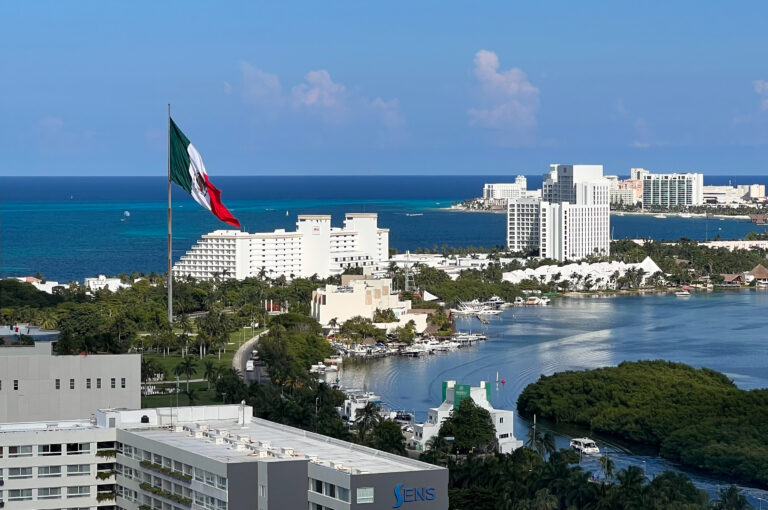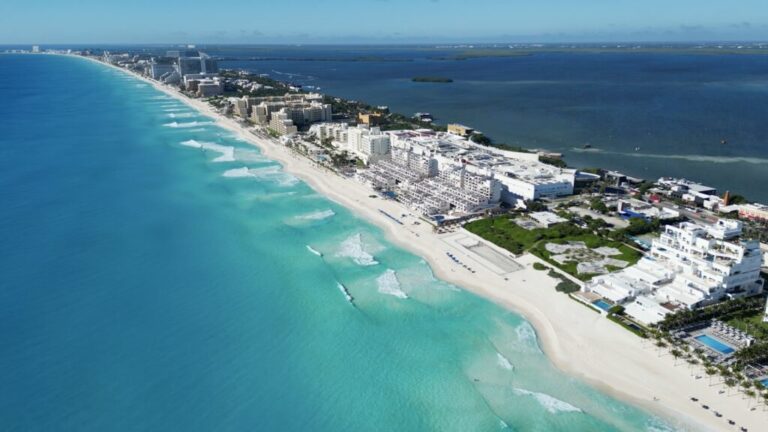

At first glance, the beaches along Cancun’s Hotel Zone can look like one long stretch of white sand and turquoise Caribbean water. But spend enough time here and you quickly realize that they are not all the same.
Some beaches have calmer water and a more relaxed atmosphere, while others face the open Caribbean and can have much stronger waves. Some are wide and spacious, others are surprisingly small, and the quality of public access, shade, parking and facilities varies considerably from one beach to another.
We live in Cancun and have visited these beaches repeatedly over the years, including during different seasons and sargassum conditions. In this guide, we’ll take you along the Hotel Zone coastline, explain what makes each beach different, and share the practical details we think are actually useful when choosing where to spend your beach day.
Quick Answer
Which Is the Best Beach in Cancun?
There isn't one beach that wins every category. The best choice depends on whether you want calm water, a huge stretch of sand, easy access to restaurants, or a livelier atmosphere. These are our picks for the Cancun Hotel Zone.
Playa Las Perlas
Small, sheltered and relatively shallow, with calmer water than the open-Caribbean beaches farther south.
Playa Delfines
A huge sweep of white sand, open Caribbean views and the famous Cancun sign. Beautiful, but expect stronger waves.
Playa Marlín
Wide, open and easy to combine with restaurants and shopping around the La Isla and Kukulcan Plaza area.
Playa Chac Mool
A central Hotel Zone beach with easy access to restaurants, bars and plenty of activity nearby.
Playa Forum / Gaviota Azul
Right beside Cancun's main nightlife district, with beach clubs, music, restaurants and the Party Center only steps away.
Playa Coral
Cancun's designated pet-friendly public beach, where dogs are permitted on a leash.
Why Cancun’s Hotel Zone Beaches Are So Different
Cancun’s Hotel Zone is shaped roughly like the number 7, and that geography has a surprisingly large effect on its beaches.
The northern stretch — where you find beaches such as Las Perlas, Langosta, Tortugas and Caracol — faces toward Bahía de Mujeres and is more sheltered from the open Caribbean. As a result, the water here is often calmer and the waves smaller. Playa Las Perlas, for example, is officially described as having shallow water and calm waves, which is one reason it works well for families with children.
Around Punta Cancún, the coastline turns south. From there, beaches such as Chac Mool, Marlín, Ballenas and Delfines face much more directly toward the Caribbean Sea. These beaches tend to be wider and more dramatic, but they are also more exposed to wind and wave action. Playa Delfines is a good example: it has a huge open stretch of sand and beautiful Caribbean views, but the municipality also specifically warns visitors about its strong waves.
You can even see the difference in the physical shape of the coast. Municipal coastal-risk data found that beaches south of Punta Cancún were substantially wider and steeper on average than beaches toward the northern side of the Hotel Zone.
This does not mean the northern beaches are always calm or the eastern beaches are always rough. Weather and sea conditions change from day to day. But the orientation of the coastline explains why two Cancun beaches only a few kilometers apart can feel like completely different places.
What About Sargassum on Cancun Beaches?
Sargassum can completely change which Cancun beach is the best choice on a particular day. The important thing to understand is that conditions are not uniform along the Hotel Zone. One beach can have noticeable accumulation while another, only a few kilometers away, looks considerably better. Wind, currents, the orientation of the coastline and ongoing cleanup all affect what eventually reaches the shore.
If you want to understand when sargassum season usually occurs and why conditions change so quickly, see our guide to sargassum season in Cancun and the Riviera Maya.
This is why we would not choose a beach based purely on what it looked like last week – or even yesterday. Cancun also has a considerable cleanup operation. During 2026, municipal crews have been removing sargassum daily from the public beaches, working alongside ZOFEMAT and the hotel sector. By late June, the municipality reported removing more than 28,000 tonnes of sargassum during the year.
From our own visits, we have also seen large differences between Hotel Zone beaches on the same day. That is why we recommend checking current conditions before heading out rather than assuming the entire coastline will look the same.
We built our Cancun and Riviera Maya Sargassum Tracker specifically for this purpose. It lets you check recent conditions and compare them with historical patterns before deciding where to go.
Public Access, Swimming Flags and Beach Facilities
One thing that sometimes confuses first-time visitors is that Cancun’s beaches are public, even where the sand in front of them is lined almost entirely with resorts.
The complication is getting there. Public beach access and walking through a hotel’s private property are not the same thing, so the easiest option is usually to use one of the designated public entrances along Boulevard Kukulcán.
Once you arrive, always check the swimming flag before getting into the water. Cancun uses a simple three-color system:
Green: conditions are considered safe for swimming.
Yellow: swim with caution; currents or sea conditions may be stronger.
Red: entering the water is prohibited because conditions are dangerous.
These flags are set according to current sea conditions, so do not assume that a beach that was calm yesterday will be safe today.
Lifeguards operate at Cancun’s main public beaches, although staffing hours can vary with the season and municipal operations. In 2026, the city has generally been staffing its public beaches between 9 AM and 7 PM during major vacation periods. Cancun also maintains an online public-beach dashboard showing current flag color, lifeguard presence and beach occupancy.
Facilities vary considerably from beach to beach. The seven municipally managed Blue Flag beaches – Las Perlas, Chac Mool, Marlín, Ballenas, Delfines, Coral and Playa del Niño – have the most standardized infrastructure, including restrooms, showers, signage and lifeguard services.
We’ll note the important differences in access and facilities as we go through each beach below.
Check Cancun's Public Beaches Before You Go
Cancun's official Public Beach Dashboard shows current swimming flags, beach occupancy, lifeguard presence and other useful information. The municipality updates the information throughout the day.
Official information provided by IMPLAN and the Municipality of Benito Juárez. Always follow posted beach flags and lifeguard instructions.
Open Full DashboardPlaya Las Perlas
Playa Las Perlas is one of the first public beaches you reach when entering Cancun’s Hotel Zone from downtown. It is a relatively small beach, but its sheltered location gives it calmer, shallower water than many of the beaches farther south, making it one of the better options for families with young children. Cancun’s official tourism site specifically highlights its shallow water and calm waves.
In our experience, Las Perlas also feels less hectic than some of Cancun’s better-known public beaches. There are public palapas and shaded areas, although arriving early is worthwhile because both the beach and parking area are relatively small.
Las Perlas is one of Cancun’s seven municipally managed Blue Flag beaches. Current facilities include free but limited parking, restrooms and showers, lifeguards during staffed hours, accessible facilities and picnic areas.
You can also reach the entrance easily on the R1 or R2 Hotel Zone buses from downtown Cancun.
Best for: families, calmer swimming and an easy beach stop close to downtown Cancun.
Playa Langosta
Playa Langosta sits around kilometer 5 of Boulevard Kukulcán and is another good option if you prefer calmer water over the stronger surf found farther south in the Hotel Zone.
The beach is not especially large, but it is easy to spend several hours here. There are public restrooms and showers, a children’s play area, food and drinks nearby, and the large colorful CANCUN letters at the entrance make it a popular photo stop.
Compared with Las Perlas, Playa Langosta feels a little more developed and active, but it still has a fairly relaxed, family-oriented atmosphere. The main drawback is shade: there is much less natural cover than at Las Perlas, so bringing your own sun protection is a good idea.
There is parking near the entrance, although spaces can fill up quickly during weekends and holiday periods. Playa Langosta is also easy to reach by the R1 and R2 buses running along Boulevard Kukulcán.
Best for: families, relaxed swimming and visitors who want more facilities without going to one of the Hotel Zone’s busier party beaches.
Playa Pez Volador
Playa Pez Volador sits just past Playa Langosta, behind the Casa Maya area of the Hotel Zone. It is easy to overlook, which is one reason it usually feels quieter than some of the better-known public beaches nearby.
Like the other beaches on this side of the Hotel Zone, the water is generally calmer and shallower than on the open-Caribbean side. We have found it to be a good option for families or anyone who simply wants a quieter place to swim. There are some rocky areas in the water, however, so water shoes can come in handy.
The trade-off is that Pez Volador is very basic. There are no public restrooms or changing rooms, little natural shade, and none of the beach clubs, rows of loungers or other infrastructure you find at more developed beaches.
There is parking near the beach, but it is limited. If you plan to spend several hours here, bring water, snacks and plenty of sun protection.
Best for: calmer water and a quieter beach experience without the crowds or commercial activity of Cancun’s busier public beaches.
Playa Tortugas
Playa Tortugas is one of the livelier public beaches on this side of Cancun’s Hotel Zone. The beach itself is not particularly large, but the shoreline slopes gently into the water and the sea is usually calmer here than on the open-Caribbean side of the Hotel Zone.
What really distinguishes Playa Tortugas is the atmosphere. There are several restaurants and bars right by the beach, along with shops, tour vendors and a small souvenir market. It is popular with both tourists and locals — particularly Mexican families — and on busy days it can get very crowded and noisy. If you are looking for peace and quiet, this probably would not be our first choice.
There is a fairly large parking area nearby, although shade on the beach itself is limited. Public toilets are also available.
Playa Tortugas is also one of the Hotel Zone departure points for Ultramar ferries to Isla Mujeres, so there is usually plenty of activity around the pier.
Best for: a lively beach day with food, drinks and plenty happening around you.
Playa Caracol
Playa Caracol is one of our personal favorites in Cancun. It is a small, narrow beach tucked between hotels and residential buildings around Punta Cancún, almost directly across Boulevard Kukulcán from Chedraui Selecto.
What we like about Caracol is that it feels quite different from the large beaches farther south. The water is generally calmer, there are usually no enormous waves, and in the evenings you will often see locals coming here to unwind after work. Despite its central location, it can feel surprisingly relaxed.
There is another advantage that is easy to overlook: after about 3 PM, the hotels behind the beach begin blocking the sun, putting much of the sand into shade. On a hot Cancun afternoon, that can be very welcome.
Caracol is also one of the more interesting Hotel Zone beaches for snorkeling. Walk a couple of hundred meters to the left from the entrance, toward the jet ski rental area, and you will reach a rocky section where the water becomes deep quite quickly. We have seen stingrays and small barracudas here. Water shoes are a good idea.
The main drawbacks are the beach’s small size, limited parking and lack of public restrooms or changing rooms.
Best for: calmer water, afternoon shade, snorkeling and a more low-key beach stop in the heart of the Hotel Zone.
Playa Gaviota Azul / Playa Forum
Playa Forum and Playa Gaviota Azul are essentially part of the same continuous stretch of sand near Cancun’s Party Center, but the atmosphere changes depending on which side you choose.
The Playa Forum side, accessed behind Coco Bongo, is the livelier part. Expect loud music, beach clubs, vendors, cocktails and a younger crowd. Nighttime beach parties are common here, and even during the day it can feel more like an extension of Cancun’s nightlife district than a quiet public beach. If you are looking for peace and quiet, this is probably not the place.
Walk farther left along the beach, toward the large cube-shaped rocks, and you reach Playa Gaviota Azul. This section is generally wider and feels a little less compressed than Forum. In our experience, the water here can also feel somewhat calmer and shallower than on many of the exposed beaches farther south.
Facilities are better than at some smaller public beaches, but many of them are commercial rather than free. Restrooms, showers, lockers, loungers and food are available nearby, and there is a 7-Eleven directly by the beach.
Parking can be difficult. There is no dedicated beach lot, although you can sometimes find space across Boulevard Kukulcán around the Forum by the Sea area.
Best for: nightlife, socializing, beach clubs and visitors who want to be right in the middle of Cancun’s busiest tourist area.
Playa Chac Mool
Playa Chac Mool is where the character of Cancun’s coastline really starts to change. By this point, you are facing the open Caribbean, and the beach is noticeably wider while the sea tends to be rougher than around Caracol, Tortugas or Langosta.
There is plenty of powdery white sand here, and outside weekends and holidays we have often found Chac Mool surprisingly spacious. It is a good beach for a long walk, especially because you can continue along the shoreline for quite some distance.
On windy days, the waves can be powerful enough to send a fine mist of sea spray across the beach. It sometimes creates a hazy look over the water — and, on a hot Cancun afternoon, the spray can actually feel quite refreshing.
There are public restrooms and showers near the entrance, several palapas for shade, lifeguards and a first-aid station. You can also usually find vendors offering drinks, umbrellas and other beach essentials.
The biggest thing to keep in mind is the water. Conditions here can be considerably rougher than on the northern side of the Hotel Zone, so always check the swimming flag before going in.
Best for: long beach walks, plenty of sand and visitors who prefer a more open Caribbean beach rather than the calmer northern coastline.
Playa Marlín
Playa Marlín is one of our favorite beaches on the open-Caribbean side of Cancun’s Hotel Zone. It has the same wide expanse of powdery white sand as Chac Mool, but the beach is larger, so it often feels less crowded even when there are quite a few people around.
There are several palapas for shade, and you can also rent umbrellas from vendors near the lifeguard area. You will not find bars directly on the beach, but vendors regularly walk through selling drinks, and there is an OXXO close to the public entrance if you need water, snacks or other supplies.
Public restrooms and showers are available near the entrance, along with a small parking area. Playa Marlín is also one of Cancun’s Blue Flag beaches, so it has more standardized public facilities than many of the smaller access points along the Hotel Zone.
Another thing worth knowing is that sea turtles nest along this stretch of coastline. During nesting season, you may see marked or protected areas on the beach, so give them plenty of space and follow any instructions from conservation staff.
The sea here can be rough, particularly on windy days, so always check the swimming flag before entering the water.
Best for: a wide Caribbean beach, more space, decent public facilities and easy access to shops nearby.
Playa San Miguelito
Playa San Miguelito is part of the long, open stretch of coastline that runs south through the Hotel Zone. Compared with beaches such as Chac Mool or Marlín, it feels much less developed, with fewer people and very little in the way of public beach infrastructure.
Getting there also takes a bit more effort. The access is not as obvious as at Cancun’s main public beaches, and you may need to walk some distance over sandy paths before reaching the shore. There are no convenient public restrooms, shops or rows of palapas waiting at the entrance, so come prepared if you plan to spend time here.
One advantage is its location near the Museo Maya de Cancún and the San Miguelito archaeological site, making this an interesting part of the Hotel Zone if you are already exploring the area.
The biggest consideration, however, is the sea. We would be particularly cautious about swimming here. Strong waves and rip currents can develop along this exposed section of coastline, and serious water-rescue incidents have occurred here. Always follow the warning flags and lifeguard instructions.
Best for: space, long beach walks and a less developed stretch of Cancun coastline rather than a conventional beach day with lots of facilities.
Playa Ballenas
Playa Ballenas is easy to pass without realizing it is there. The public entrance sits between the Hard Rock Hotel and Secrets The Vine, and compared with entrances such as Delfines or Marlín, it is not particularly obvious from Boulevard Kukulcán.
Once you reach the sand, however, there is plenty of space. Ballenas sits on the exposed Caribbean side of the Hotel Zone, and the water here can be noticeably rougher than at the beaches farther north. Strong waves and currents are not unusual, so this is another beach where we would pay close attention to the warning flags before swimming.
The beach has several palapas for shade, public restrooms and showers, accessible ramps, lifeguards and a small parking area. There are no convenience stores or restaurants directly at the public entrance, though, so bringing water and anything else you need is a good idea.
Because the entrance is less conspicuous than at some of Cancun’s better-known beaches, Ballenas can also feel less hectic despite being surrounded by large resorts.
Best for: plenty of sand, fewer distractions and visitors who want a more relaxed public beach on the open-Caribbean side of the Hotel Zone.
Playa Delfines
Playa Delfines is probably the most famous public beach in Cancun — and certainly one of the largest. At kilometer 18 of Boulevard Kukulcán, it opens into a huge expanse of white sand facing directly toward the Caribbean Sea.
This is the Cancun beach people often imagine before they arrive: bright turquoise water, a wide horizon and powerful waves rolling toward the shore. There is also a large viewpoint above the beach and the famous CANCUN letters, so it is one of the most popular photo stops in the Hotel Zone.
But Delfines is not always the easiest beach for swimming. In our experience, the water gets deep relatively quickly and the waves can be strong. On rough days, this is definitely a beach where you should take the warning flags seriously.
There are plenty of free public palapas, although the best ones disappear quickly on busy days. You will also find free parking, public restrooms, showers and changing facilities, as well as lifeguards during staffed hours. There are no permanent shops directly on the beach, so bringing water and snacks is a good idea.
Delfines can get busy, particularly on weekends, but because the beach is so large, there is usually plenty of room to spread out.
Practical tip: if you want to combine the beach with something different, the El Rey Archaeological Zone is within walking distance. Both Playa Delfines and El Rey are around kilometer 18 of Boulevard Kukulcán, so it is easy to visit the Maya ruins and the beach on the same outing. El Rey is a relatively compact site, making this a much easier combination than dedicating an entire day to one of the larger archaeological zones outside Cancun.
Best for: the classic Cancun beach experience, huge stretches of sand, Caribbean views and photography — especially if calm swimming is not your main priority.
Playa Coral
Playa Coral is the last beach on our route through Cancun’s Hotel Zone, located at kilometer 25 of Boulevard Kukulcán near Punta Nizuc, where the road begins curving toward the airport. You may also see it referred to as El Mirador II.
What makes Coral different from every other beach on this list is simple: it is Cancun’s official dog-friendly beach. If you are traveling with your dog or live in Cancun and want to take your four-legged companion to the sea, this is the place to go. Dogs are allowed on the beach but should be kept on a leash.
The beach itself is relatively small and surrounded by more greenery than many of the heavily developed stretches farther north. There is free parking, palapas for shade, changing facilities and a lifeguard tower. The water is generally calmer here as well.
If you bring your dog, remember to bring bags and clean up after them — there are trash bins available around the beach.
Best for: travelers and Cancun residents who want to enjoy the beach with their dogs.
Blue Flag Beaches
Which Cancun Hotel Zone Beaches Have Blue Flag Certification?
For the 2026–2027 season, six public beaches in Cancun's Hotel Zone hold the international Blue Flag distinction.
Blue Flag beaches in the Hotel Zone
What does Blue Flag actually check?
Tap a category to see what the certification tells you — and what it does not.
Water Quality
Blue Flag beaches must meet bathing-water quality standards and follow defined sampling and monitoring requirements. The award is not simply based on how clear or turquoise the water looks.
The seventh is Playa del Niño in Puerto Juárez. It is outside the Hotel Zone, so we have not included it in this Hotel Zone guide.
Sources: Municipio de Benito Juárez and Blue Flag / Foundation for Environmental Education .
How to Get Between Cancun’s Beaches
If you want to visit several beaches in Cancun’s Hotel Zone, you really do not need a rental car. For most visitors, the easiest and cheapest way to move between them is the R1 or R2 bus.
Both routes travel along Boulevard Kukulcán and pass most of the public beaches covered in this guide. The current authorized fare in the Hotel Zone is MXN 12 per ride. Buses run frequently, so there is usually little reason to plan around a timetable.
If you are unsure where to get off, tell the driver the name of the beach when you board. For well-known stops such as Playa Delfines, Chac Mool or Marlín, this is generally straightforward.
Taxis are another option, particularly if you are carrying a lot of beach gear, but they are considerably more expensive. We recommend agreeing on the fare before getting in rather than assuming there will be a meter.
Driving is convenient if you already have a rental car, but we would not rent one specifically for beach-hopping. Parking varies enormously: Delfines has a large public lot, while places such as Caracol and Marlín have much more limited space.
For beaches that are relatively close together, walking along the shoreline can sometimes be the easiest option — and a good way to discover stretches of beach you would otherwise miss.
See Cancun’s Hotel Zone Beaches for Yourself
Want to see how the coastline actually changes as you move through the Hotel Zone? We filmed a time-lapse walkthrough of Cancun’s beaches so you can see the differences in beach width, development, crowds and the coastline for yourself.
Which Cancun Beach Should You Choose?
There is no single beach in Cancun that works best for everyone.
If you want calmer water, the northern side of the Hotel Zone will usually make more sense. If you want the huge white-sand beaches and dramatic Caribbean views Cancun is famous for, head farther south toward Marlín, Ballenas or Delfines. And if nightlife matters more than peace and quiet, Forum and Gaviota Azul are in a completely different category.
The other thing we have learned from living here is that beach conditions are never completely static. Wind, waves, crowds and sargassum can make the same beach feel very different from one day to the next.
So use this guide to narrow down your options, check the conditions before you go, and do not be afraid to try more than one beach. Getting around the Hotel Zone is easy enough that you really do not have to choose just one.