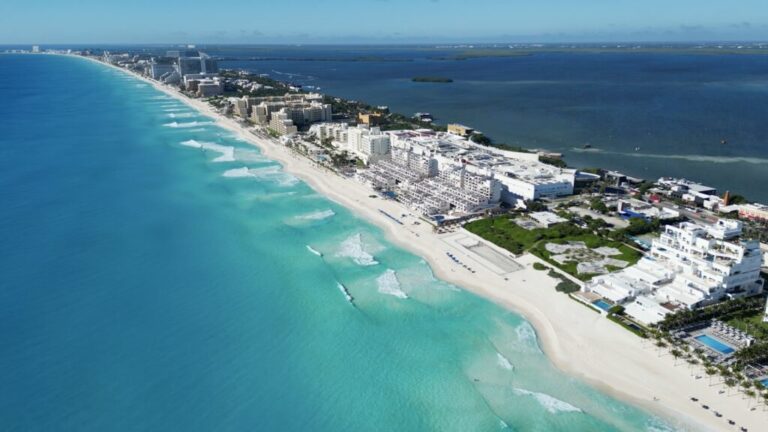

The best time to visit Cancun for generally drier weather and comfortable sightseeing temperatures is December to April. For most visitors, that is the strongest starting point. The trade-off is higher demand and, often, a bigger accommodation bill.
But a good month for exploring ruins may suit you differently from one spent swimming or relaxing by the pool. How much heat can you comfortably handle? Is a quieter resort worth accepting more weather uncertainty? And if the beach is the main reason you’re coming, sargassum belongs in the decision too.
We live in Cancún, and this guide combines our local perspective with historical climate data to help you weigh those choices. We’ll compare all 12 months, explain what temperature and humidity figures mean for your holiday, and show where crowds, costs and beach conditions complicate the picture.
Start with what matters most to your trip below. Then use the monthly comparison to narrow down your dates—or work out what to expect if you’ve already booked.
Choose your top priority for a shortlist of months and the main compromise to consider.
What matters most to your trip?
Generally drier weather and less intense heat make this a useful starting window for sightseeing and time outdoors.
Demand and accommodation prices are often higher. Rain and windy days are still possible.
Before booking: compare exact weeks and check holiday dates.
Start with the cooler months if reducing the usual spring–summer sargassum exposure matters most. This is a seasonal starting point, not a clear-beach guarantee.
Wind and waves can still affect swimming. Beach conditions vary by location and from year to year.
Before booking: choose your stretch of beach carefully and check recent local reports close to the trip.
Compare May and the September–November low season for accommodation rates outside the main winter peak. The best deal depends on your exact dates.
May is hotter. September–October are generally wetter, and Atlantic hurricane season continues through November 30.
Before booking: compare the total trip cost and cancellation terms.
Cancún’s tourism guidance identifies this as the quieter low season. Use it as a starting point when a less crowded stay matters most.
This window falls within Atlantic hurricane season. September–October are generally wetter; holiday weeks can still be busy.
Before booking: check holiday dates and your chosen resort’s atmosphere.
Sources & how to use this guide
These are editorial starting windows based on typical seasonal patterns. Use them to shortlist dates, then check current conditions and exact rates. Sargassum can arrive outside its usual season.
Sources checked November 14, 2026
Cancun month by month: weather and trade-offs
Start by comparing the months that fit your calendar. Look at daytime highs, overnight temperatures and humidity together, particularly if your plans include long walks or days at the ruins.
The explorer below lets you compare two months, follow the temperature through a typical day and see how often the air falls into different humidity bands. Each month also includes planning advice and its main compromise.
Try January and August first. Compare their overnight temperatures, then switch to the humidity view. After that, select your own travel months to narrow down your options.
Choose your month, add a comparison and explore the typical daily pattern. Regional climate estimates, 2001–2025.
Average daily highs and lows, calculated from hourly estimates. Shading shows the 10th–90th percentile range for each.
January: average high 26.5°C; average low 22.2°C.
Each square is the average temperature for a month and hour. Times use Cancún’s present local clock, UTC−5.
Share of historical hours in each dew-point band. This shows moisture in the air; relative humidity is a different measure.
One of the cooler parts of the year, with less intense humidity than summer. Useful for combining beach time with walking and day trips.
Planning tip: Compare weeks after the New Year rush if your dates are flexible.
“Muggy hours” means dew point at least 18°C. Comfort also depends on heat, wind and personal preference. Regional estimates smooth local extremes; individual beaches and hotels can differ.
All 12 months: temperature and humidity values
| Month | High | Low | Muggy hours |
|---|---|---|---|
| January | 26.5°C | 22.2°C | 71% |
| February | 27.3°C | 22.6°C | 80% |
| March | 28.4°C | 23.2°C | 81% |
| April | 29.7°C | 24.4°C | 91% |
| May | 30.6°C | 25.7°C | 98% |
| June | 29.9°C | 26.4°C | 100% |
| July | 30.2°C | 26.6°C | 100% |
| August | 30.6°C | 26.9°C | 100% |
| September | 30.1°C | 26.6°C | 100% |
| October | 29.0°C | 25.8°C | 99% |
| November | 27.6°C | 24.1°C | 92% |
| December | 27.0°C | 23.2°C | 85% |
Sources, definitions & limitations
Data: NASA POWER hourly meteorology, sourced from MERRA-2. Requested location: 21.15°N, 86.85°W. Period: January 1, 2001–December 31, 2025; 219,144 hourly estimates. The underlying meteorology grid is approximately 0.5° latitude × 0.625° longitude, so this represents regional conditions rather than a particular property.
Temperature: each day’s high and low are the maximum and minimum of its 24 hourly mean estimates, then averaged by calendar month. These sampled extrema can be less extreme than daily station readings. Shaded bands are the 10th–90th percentiles of the sampled daily highs and lows. The heatmap averages each calendar month and clock hour across all years.
Humidity: every hourly dew point is classified before percentages are calculated. Our descriptive bands are below 13°C, 13–<16°C, 16–<18°C, 18–<21°C, and 21°C or higher. These labels are a reading aid, and are not a calibrated personal comfort score. Percentages use all valid hours, including nights.
Time: UTC−5 is applied consistently to all historical timestamps to express the pattern using Cancún’s present clock. Historical daylight-saving arrangements are not reproduced. All local dates have 24 complete hourly estimates.
Planning notes: editorial guidance combines the climate patterns with official tourism seasons and Atlantic storm-season information. Actual weather, sargassum and hotel rates require checks for your travel dates.
- NASA POWER: hourly data and time standards
- NASA POWER: meteorological sources and resolution
- US National Weather Service: dew point and humidity
- Cancún tourism: travel seasons
- NOAA: Atlantic hurricane climatology
Data retrieved November 14, 2026. Analysis and presentation: TacosTravels. This is a historical climate guide; it does not provide a forecast for your holiday.
January: A cooler start to the year
One of the cooler parts of the year, with less intense humidity than summer. Useful for combining beach time with walking and day trips.
The trade-off: Winter demand can make accommodation expensive. Wind and cloudier spells can still interrupt beach plans.
Planning tip: Compare weeks after the New Year rush if your dates are flexible.
February: Comfortable for exploring
Still within the cooler season, with relatively modest rainfall in the regional record. A practical month for days that mix the beach and sightseeing.
The trade-off: Popular winter dates can carry high prices. Dry-season travel still includes humid hours.
Planning tip: Check your chosen week against school holidays and long weekends.
March: Drier days, warming afternoons
Among the drier months in this dataset, while afternoons begin to warm. A useful starting point for outdoor plans.
The trade-off: Spring-break and Easter-related demand can change the feel and price of particular weeks.
Planning tip: Compare the resort’s atmosphere as well as the month.
April: Warm days before the wetter stretch
The regional record remains comparatively dry, with warmer afternoons and increasing humidity. Worth considering if you prefer more warmth than midwinter.
The trade-off: Easter timing and increasing seaweed exposure need separate checks.
Planning tip: Plan long walks and ruins visits for the cooler part of the day.
May: A warmer shoulder-season option
Heat and humidity build, while rainfall is generally lower than in the wetter autumn months. Worth comparing when you want alternatives to winter rates.
The trade-off: Sticky conditions and sargassum can matter more on a beach-focused holiday.
Planning tip: Look for good shade and air conditioning, and build flexible beach plans.
June: Humid, with a step up in rain
Regional rainfall rises, and even nights remain warm. Outdoor plans involve more heat and moisture than in winter.
The trade-off: Atlantic hurricane season begins June 1. Sargassum is another consideration for a beach holiday.
Planning tip: Keep outdoor day trips flexible and check marine conditions before boat trips.
July: Hot days and warm nights
Midyear heat and high dew points dominate the regional record. A pool-led holiday can suit travellers comfortable with humid conditions.
The trade-off: Weather and seaweed can limit beach plans; recent local conditions matter.
Planning tip: Schedule walking early and allow time for shaded breaks.
August: Summer heat with little overnight relief
One of the warmest months in the gridded record. High dew points make evenings and nights humid as well as afternoons.
The trade-off: Rain and storm-season uncertainty accompany the heat.
Planning tip: Consider pool shade and air conditioning alongside the beach when choosing accommodation.
September: Quieter-season possibilities, wetter conditions
Fewer crowds and low-season rates can appeal, but the regional record is very humid and wetter than the drier part of the year.
The trade-off: Rain and storm-season uncertainty are central booking considerations.
Planning tip: Compare flexible cancellation terms before committing.
October: Compare the savings with the rainfall
The wettest month by average monthly rainfall in this dataset. Still warm, with high dew points and low-season opportunities.
The trade-off: Rain can affect plans, and Atlantic hurricane season continues.
Planning tip: Keep a few indoor or more weather-flexible options in your itinerary.
November: A transition toward winter
Cooler than summer, with less rainfall than October in the regional record. A possible compromise when weighing weather against low-season rates.
The trade-off: November still falls within hurricane season, and busy holiday weeks can change prices.
Planning tip: Compare early- and late-month dates rather than treating November as uniform.
December: Winter weather, holiday demand
Cooler days return and regional rainfall is lower than the autumn peak. A useful starting point for visitors seeking relief from summer heat.
The trade-off: Christmas and New Year dates can bring higher demand and prices.
Planning tip: Compare weeks before the holiday peak if your dates allow.
When is the weather best in Cancun?
December to April is the strongest starting window for generally drier weather and more comfortable outdoor temperatures. It suits a holiday that combines the beach with walking, ruins and day trips. The main compromise is demand: this is also Cancún’s high season, when accommodation often costs more.
Within that window, think about how you want to spend your days. For several walking-heavy excursions, we would lean toward the cooler months. If your plans revolve around swimming and pool time, warmer conditions may suit you better.
Humidity changes how the temperature feels
A temperature forecast gives you only part of the picture. Dew point helps explain how muggy the air may feel. Higher dew points indicate more moisture, so an evening can remain sticky even as the temperature falls. Relative humidity percentages are harder to compare because they also change with air temperature.
That is why the explorer includes a separate humidity view. When comparing dates, look at overnight temperatures and the persistence of muggy conditions alongside the daytime highs.
For a sightseeing-heavy trip, the practical consequence is simple: leave room for early starts, shade and breaks instead of filling every afternoon with outdoor activities.
Read beyond the rain icon
A rain symbol tells you little about how much of your day might be affected. A passing shower and a prolonged wet spell call for different plans.
The forecast’s rain percentage describes the chance of measurable rain at a location during the stated period. It does not describe how long the rain will last or how heavy it will be. Check the hourly forecast, expected rainfall and any warnings before deciding whether to rearrange an excursion.
This also explains why a monthly rainfall average cannot tell you exactly how many usable beach hours your particular week will deliver.
Winter wind matters for boat trips
During the cooler season, cold fronts known locally as nortes can bring wind, cloud and rougher seas. Strong winds can lead to navigation restrictions, particularly for smaller boats.
If snorkelling, diving or a boat excursion is central to your holiday, leave some flexibility in the itinerary and confirm conditions with your operator. Restrictions can differ between small recreational boats and passenger ferries, so check your particular service.
Your beach shortlist should also account for sargassum, which can affect conditions even when the weather looks inviting.
Best time to visit Cancun to avoid seaweed
If reducing sargassum exposure is a priority, we would start by comparing December to March. Regional records generally show lower quantities in winter, while Mexico’s Navy identifies April to October as the main seasonal cycle along the Quintana Roo coast.
Check out our guide on visiting Tulum ruins without a tour
Those months provide a starting point for planning. Arrivals can begin earlier, continue later and vary substantially between years. A winter booking still needs a check of current conditions as the trip approaches.
Your beach matters as much as your month
Wind and ocean currents influence where floating sargassum travels. The amount offshore is therefore only part of the picture: nearby stretches of coastline can experience quite different conditions.
We saw this during our August 10–11, 2026 beach checks. Caracol had the best conditions among the Cancún beaches we visited, while Delfines had the heaviest accumulation. That comparison documents those dates; it is not a permanent ranking of either beach. Our sargassum guide for Cancún and the Riviera Maya includes the footage and our observations across the season.
For a beach-focused holiday, this makes the location of your accommodation another important choice alongside your travel dates.
How to check before booking—and before swimming
Use different information at different stages:
Months ahead: compare seasonal patterns and decide how much uncertainty you are comfortable accepting.
Closer to departure: check recent regional observations and dated photographs or webcams from your intended beach.
During your stay: check local conditions before heading out, and keep an alternative beach or inland activity in reserve.
When asking a hotel for an update, request a recent photograph or short video showing both the sand and the water near shore. Check when it was taken; an attractive image from another month tells you little about today’s conditions.
Our Cancún and Riviera Maya sargassum tracker provides current and historical satellite-based information to help you explore the regional picture. Pair that with recent observations from the beach you plan to use. Satellite outlooks cannot guarantee conditions on a particular stretch of sand.
With weather and beach priorities clearer, the next consideration is what your shortlisted dates cost—and how busy they are likely to be.
Cheapest time to visit Cancun: prices and crowds
Start with September–November if you want lower prices and fewer crowds. Cancún’s municipal tourism office identifies these months as low season, when accommodation deals are generally easier to find. The compromise is weather: September and October are also among the wettest months.
We would also price a May stay at your shortlisted hotels. Compare any saving with how comfortable you would be in the hotter, more humid conditions shown in the climate explorer.
December–April generally brings stronger demand and higher prices alongside the cooler, drier weather. But a month is only a starting point: the particular week you choose can change the comparison considerably.
Check the holiday calendar before choosing your week
Pay particular attention to these travel periods:
-
Christmas and New Year. The festive holiday period brings substantial demand. If your dates are flexible, compare an earlier December stay with the Christmas-to-New-Year period at the same hotel.
-
Spring break and Semana Santa. Both can bring busy periods during March and April. Semana Santa is the Easter holiday period, so check its dates for your travel year before choosing a supposedly quieter week.
-
Summer school holidays. Give July and August a closer look if avoiding crowds matters. Summer family travel can create strong demand even outside the winter high season.
For a quieter trip, use the low-season window to narrow your search, then check whether your chosen resort has a major event or group booking during your stay.
Compare the holiday you would actually book
Choose two or three possible weeks and compare the total trip cost, including flights and airport transportation. Keep the hotel, room category, number of guests and meal plan consistent, and check taxes, additional charges and cancellation terms.
That makes the saving meaningful. A cheaper room with fewer inclusions may leave you spending more overall; a flexible booking may be worth paying extra for if your plans could change.
There is no single month that will always produce the lowest quote for your departure airport and preferred hotel. Let seasonality guide your shortlist, then let comparable prices decide.
Before booking an autumn deal, there is one more question to settle: what does travelling during hurricane season actually involve?
Hurricane season in Cancun: what to check before booking
Hurricane season runs from June 1 to November 30. Across the Atlantic basin, activity historically concentrates between mid-August and mid-October, with a statistical peak around September 10. Those are regional patterns, rather than a prediction of what will happen in Cancún during your stay.
For an autumn booking, the practical question is how much disruption your trip could absorb. A postponed excursion might be manageable during a flexible week. It matters much more if that excursion is the main reason you are coming and you have only three days.
Check what happens if your plans change
Before committing to a deal, check three things:
-
Your booking terms. Read the hotel’s cancellation deadline and the airline’s change rules. Check whether moving your dates would involve fees, a fare difference or both.
-
Your insurance coverage. Look for the specific circumstances covered under cancellation, interruption and delay. Ask how the policy handles severe weather, transport disruption and accommodation becoming unusable; each policy has its own conditions and limits.
-
Your accommodation’s emergency arrangements. Ask how guests receive official instructions and what arrangements apply if authorities require protective action.
Check insurance when you book. The US National Association of Insurance Commissioners warns that buying a policy after a storm has been named will typically leave claims related to that storm excluded. Confirm the wording with your own insurer.
Use current forecasts as departure approaches
Historical averages help you choose a travel window. As your trip approaches, follow National Hurricane Center updates and official guidance from Quintana Roo’s Protección Civil. During your stay, follow local authorities’ instructions and your accommodation’s emergency procedures. Quintana Roo’s preparedness guidance specifically directs residents and visitors to official information and Protección Civil recommendations.
If you choose an autumn stay, make flexibility part of the price comparison from the beginning. Consider what changing dates, losing an excursion or extending your stay would mean for your budget and plans.
There is another reason to choose dates carefully: some of Cancún’s most memorable activities have a season of their own.
Best time to visit Cancun for whale sharks, ruins and festivals
If one experience is the main reason you’re coming, check its calendar before booking your flights. A whale-shark trip and a holiday spent exploring archaeological sites can lead you towards very different months.
Whale sharks: look at May–September
Whale sharks gather in the northern Mexican Caribbean approximately May–September, making them a reason to consider a summer visit despite the heat and humidity. Their movements vary, so choosing the right season still leaves uncertainty about sightings on a particular day.
Before committing to travel dates, confirm the authorised season for your year and the operator’s actual departure schedule. SEMARNAT publishes season notices and management guidance for whale-shark observation and swimming in the Mexican Caribbean.
We would schedule this excursion early enough in the stay to leave another possible day, and check the operator’s weather-cancellation and rescheduling terms.
Archaeological sites: start with December–April
For a holiday built around walking through ruins, December–April is a useful starting window because of the generally cooler, drier conditions. Cancún’s tourism office specifically identifies this period as favourable for archaeological excursions.
The time of day deserves attention too. Consider arriving near opening, particularly during hotter months, and check the site’s official visiting information before arranging transport.
For an inland destination such as Chichén Itzá, check a forecast for the site itself. The Cancún climate explorer describes coastal conditions; use it to compare travel months, then refine your day-trip plans locally.
Festivals: choose the event, then the travel dates
For Día de Muertos, centre your initial search on November 1–2. If you want to attend a particular festival, performance or public celebration, confirm the organiser’s programme for your travel year before booking around it.
Check the location as carefully as the date. An evening event elsewhere in the Riviera Maya needs a realistic return-transport plan, especially if you are staying in Cancún.
Once an activity sets your travel window, use the monthly explorer to compare the weather compromises within it.
Before you book: turn your shortlist into travel dates
December–April remains our starting recommendation for generally cooler, drier weather. Your budget, beach priorities or a seasonal activity may point you towards another window.
Choose two weeks you could realistically travel, then compare them using these five checks:
-
Your main reason for coming. Confirm the dates of any essential activity or event before arranging flights around it.
-
Your comfort with the weather. Use the climate explorer to compare daytime highs, overnight temperatures and humidity. Think about how much time you intend to spend outdoors.
-
The complete price. Compare flights, accommodation, transfers and inclusions for the same number of nights. Check whether either week overlaps a holiday period.
-
Your beach expectations. Use seasonal sargassum patterns when booking months ahead. As departure approaches, look for recent, dated observations of the beach you intend to use.
-
Your room to change plans. Read cancellation and rescheduling terms. If buying insurance, check the covered reasons, limits and exclusions before paying.
Before you commit, finish this sentence together:
“We’re choosing these dates because ______, and we’re comfortable with ______.”
The first blank is your main priority. The second is the compromise you are willing to make.