Mexican alcoholic drinks go far beyond tequila and mezcal. Across the country, you’ll find everything from agave spirits and regional liqueurs to fermented drinks whose origins stretch back long before modern Mexico.
Since moving to Mexico, we’ve come across quite a few of them ourselves—from bottles of Xtabentún on supermarket shelves in Yucatán to lesser-known spirits that rarely get much attention outside the regions where they’re produced. Some are easy to find almost anywhere in the country; others are distinctly local.
In this guide, we’ll look at some of the most interesting traditional Mexican alcoholic drinks, including tequila, mezcal, pulque, sotol, bacanora, raicilla, Xtabentún and pox. We’ll explain what each one is made from, where it comes from, what it tastes like, and what makes it different from the rest.
What Makes a Mexican Alcoholic Drink Traditional?
There is no single legal definition of a “traditional Mexican alcoholic drink.” Some have centuries of history behind them, while others are closely tied to a particular region, ingredient or production method.
Several Mexican spirits also have a protected Denomination of Origin, meaning their name can only be used for products made within specified geographic areas and according to the rules for that category. Tequila, mezcal, bacanora, sotol and raicilla all have this protection.
But a drink does not need a Denomination of Origin to be traditional. Pulque, for example, is a fermented agave drink with roots reaching back to pre-Hispanic Mexico, while regional drinks such as Xtabentún and pox remain strongly associated with Yucatán and Chiapas.
That variety is part of what makes Mexican drinking culture so interesting: there is no single ingredient or production method that defines it.
Tequila
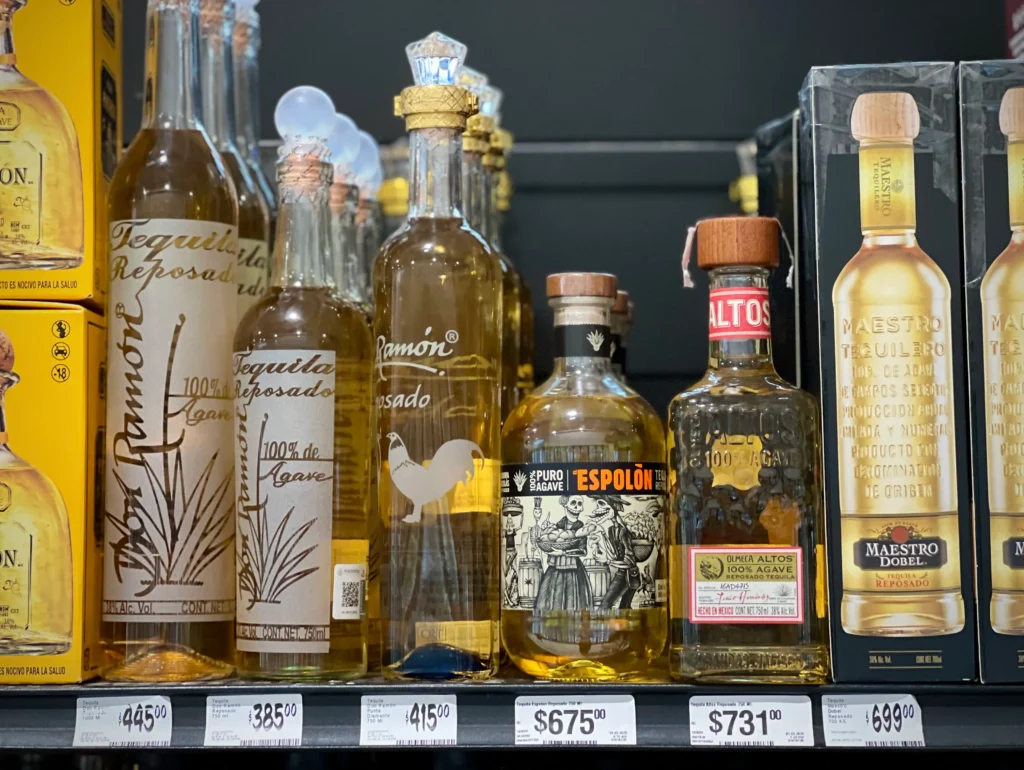
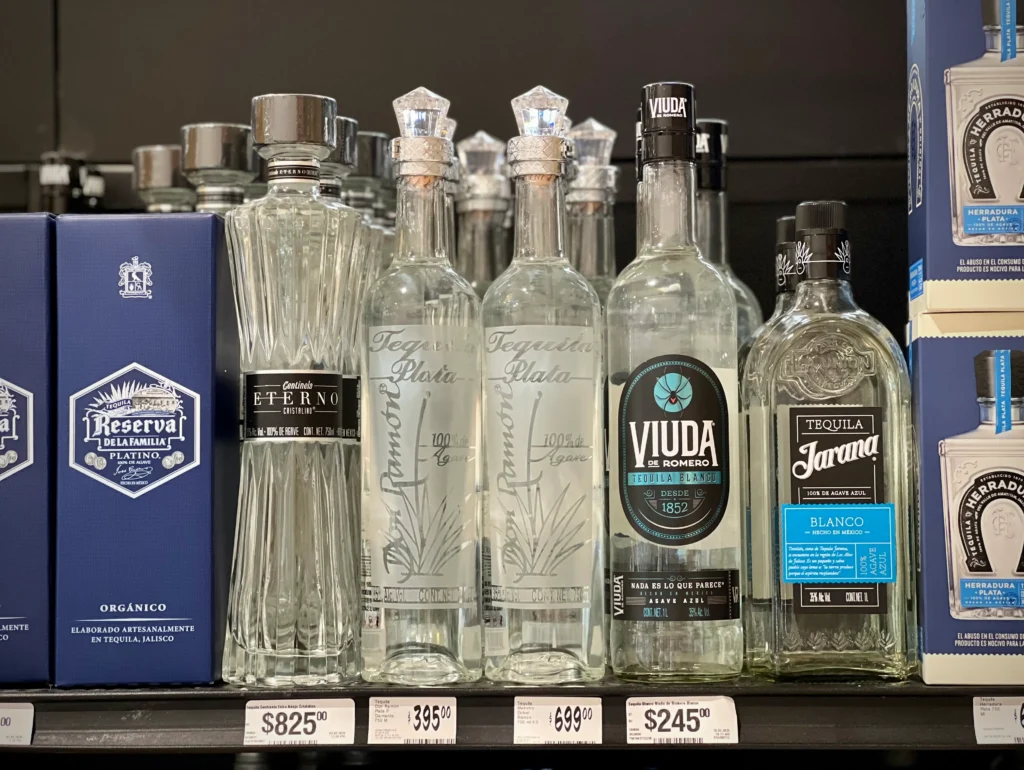
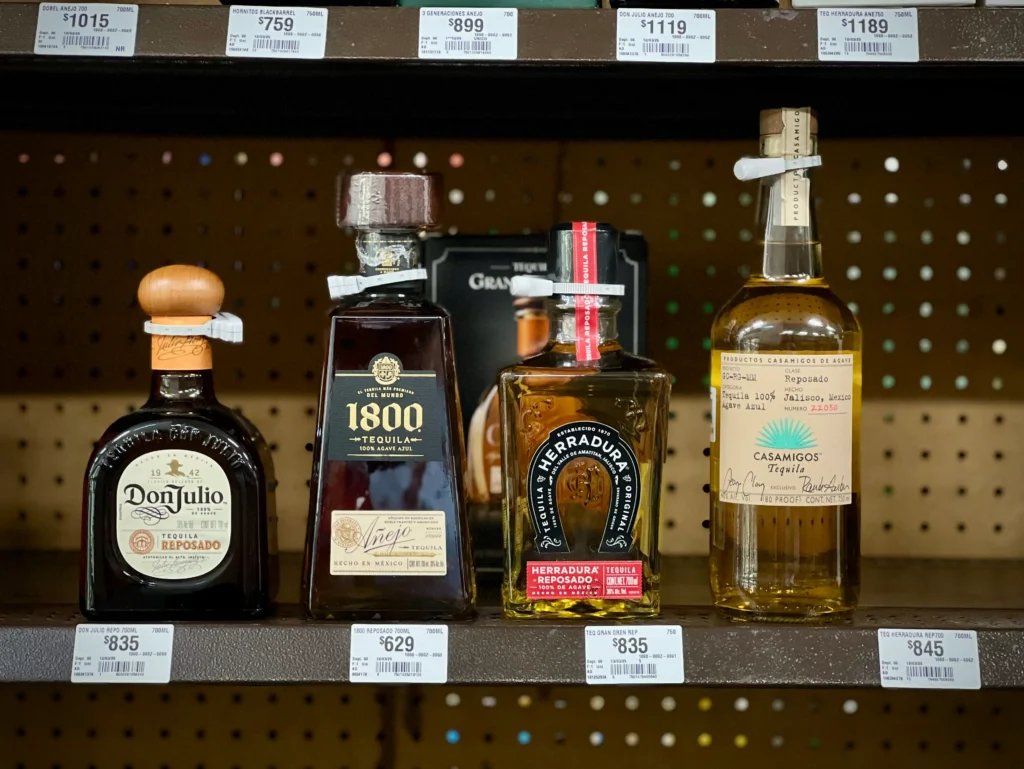
Tequila is easily Mexico’s most internationally recognizable spirit, but there is more to it than shots with salt and lime.
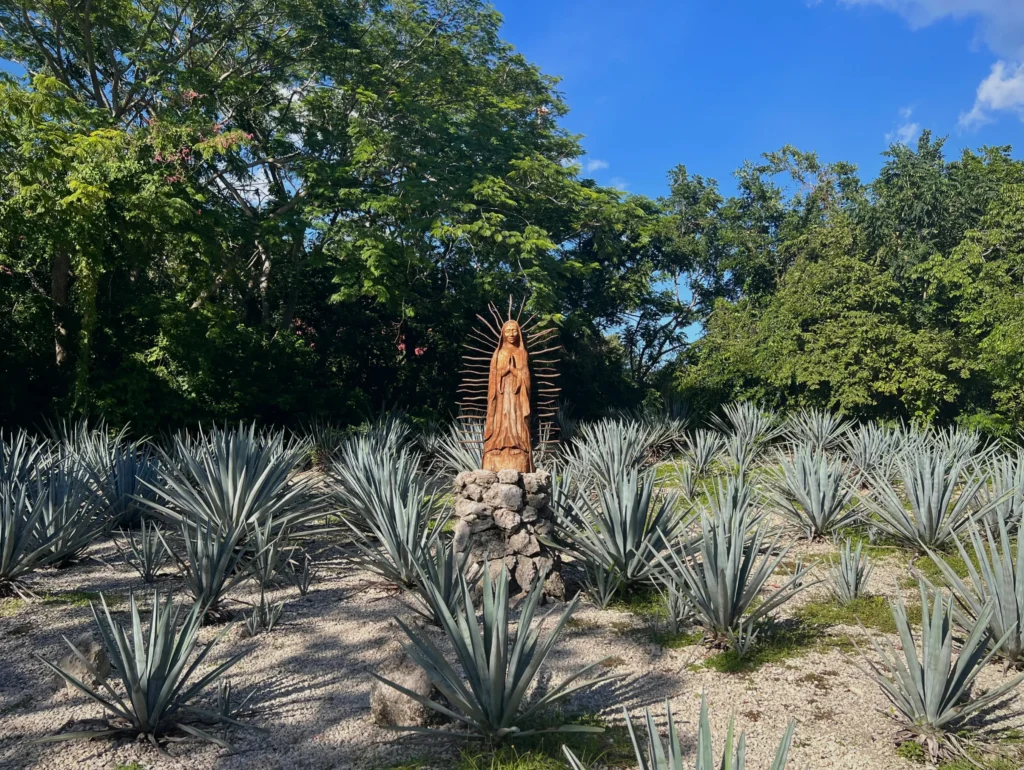
By law, tequila must be made from blue Weber agave (Agave tequilana Weber var. azul) and produced within the area covered by the Tequila Denomination of Origin. That area includes all of Jalisco and selected municipalities in Guanajuato, Michoacán, Nayarit and Tamaulipas.
One label distinction is especially useful when choosing a bottle. Tequila 100% Agave means that all of the sugars used for fermentation came from blue agave. A bottle labeled simply Tequila is still genuine tequila, but up to 49% of its fermentable sugars may come from other permitted sources.
You’ll also see tequila divided by aging:
Blanco is unaged or minimally rested and generally puts the agave character front and center.
Reposado spends at least two months in oak.
Añejo is aged for at least one year.
Extra Añejo spends at least three years in oak.
As the spirit spends more time in wood, the flavor can shift from the fresher herbal and cooked-agave notes associated with blanco toward vanilla, spice, dried fruit and oak.
For travelers trying tequila in Mexico, the easiest starting point is simply to look for “100% agave” on the label and compare a blanco with a reposado. It is a much better introduction to the spirit than treating tequila as something meant to be swallowed as quickly as possible.
Check a Tequila NOM
Enter the four-digit NOM printed on a tequila label, or search by brand, to compare it with our local snapshot of the Consejo Regulador del Tequila registry.
A NOM identifies the authorized producer. Several tequila brands can share the same NOM.
Check the NOM Number
There is another useful detail to look for on a tequila bottle: the NOM number.
Certified tequila carries a mark containing NOM followed by a four-digit number and the letters CRT. The four digits identify the authorized producer that made the tequila. You can enter that number—or the brand name—into the Consejo Regulador del Tequila’s database to see which registered producer is behind the bottle.
One NOM can appear on several different brands because the number identifies the producer, not the brand itself. It is therefore useful for checking where a tequila actually came from, rather than judging its quality.
For travelers buying tequila in Mexico, our advice is simple: look for 100% agave, check the NOM, and buy from an established supermarket or liquor store. It is a much better starting point than assuming an expensive bottle in a tourist-oriented tequila shop must somehow be more authentic.
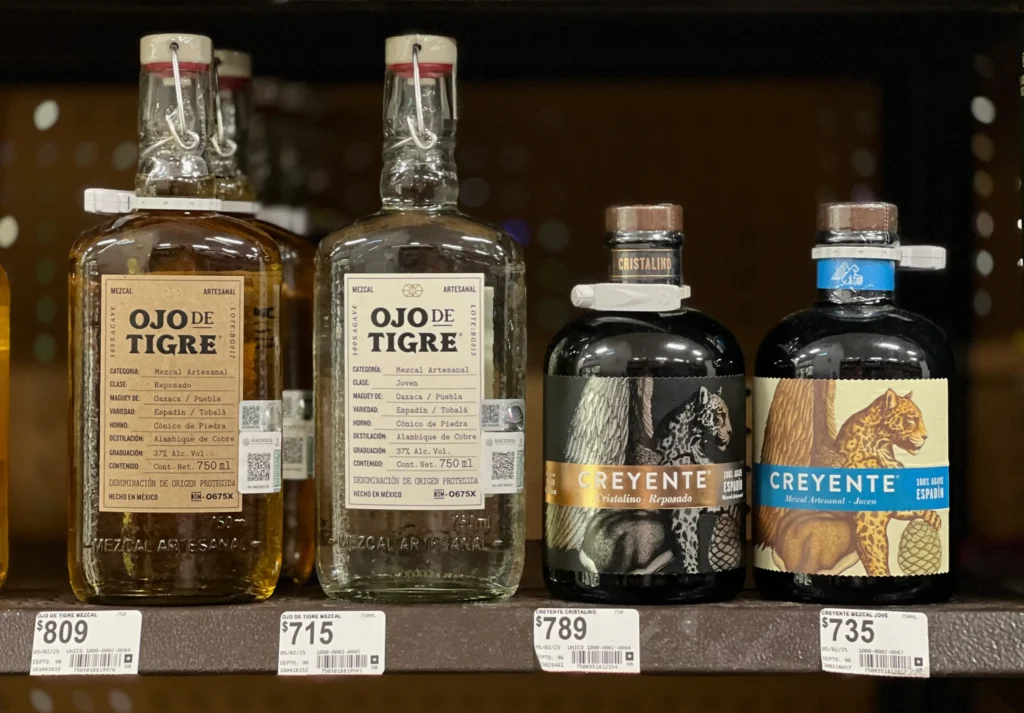
Mezcal
Mezcal is often described as tequila’s smoky cousin, but that comparison is a little too simple.
Unlike tequila, which must be made from blue Weber agave, mezcal can be produced from different species of agave. That is one reason the category is so varied: the plant used, where it was grown and how the spirit was produced can all influence the final flavor.
Mezcal also has its own protected Denomination of Origin. As of 2026, authorized production areas extend across 12 Mexican states: Oaxaca, Guerrero, Durango, San Luis Potosí, Zacatecas, Tamaulipas, Michoacán, Puebla, Guanajuato, Aguascalientes, Morelos and Estado de México. The denomination has expanded repeatedly since 1994, and some territorial additions have been challenged in court.
One common misconception is that all mezcal must be made by roasting agave in an underground pit. Mexican regulations actually recognize three production categories:
Mezcal can use several cooking methods, including pit ovens, masonry ovens and autoclaves.
Mezcal Artesanal uses more restricted traditional equipment, including pit or masonry ovens.
Mezcal Ancestral requires the agave to be cooked in a pit oven and follows the narrowest set of traditional production methods.
That also means mezcal does not automatically equal smoky. Smoke can be an important part of some mezcals, but others can be herbal, fruity, earthy, mineral or surprisingly delicate.
If you are trying mezcal for the first time, it is worth tasting a few side by side rather than judging the entire category from a single bottle. The variety is really the point.
Raicilla
Raicilla is another Mexican agave spirit, but it is not simply a type of tequila or mezcal.
It has its own Denomination of Origin, granted in 2019, covering 16 municipalities in Jalisco and the municipality of Bahía de Banderas in Nayarit. By definition, raicilla is made entirely from agave, but unlike tequila it is not made from blue Weber agave.
There are also two broad regional styles. Raicilla de la Sierra, produced in the mountains, is commonly made from agaves such as Agave maximiliana and Agave inaequidens. Raicilla de la Costa, from the Pacific coast, typically uses species such as Agave angustifolia and Agave rhodacantha.
That difference in raw material, climate and production method means raicilla can vary considerably from one producer to another. Some expressions are fruity or floral, while others lean more herbal, earthy or mineral.
If you are traveling around Puerto Vallarta or western Jalisco, raicilla is one of the most regionally distinctive spirits you are likely to encounter.
Bacanora
Bacanora is a traditional agave spirit from Sonora, in northwestern Mexico. It is made from Agave angustifolia—often locally called Agave Pacífica or Yaquiana—and today has its own protected Denomination of Origin covering 35 municipalities in the state.
Its history is unusually dramatic. The prohibition came from Plutarco Elías Calles, then governor of Sonora, who in 1915 banned the manufacture and sale of alcoholic beverages in the state. Bacanora production was forced underground — and Calles would later serve as President of Mexico from 1924 to 1928. The prohibition was finally lifted in 1992, and Bacanora received its Denomination of Origin eight years later.
Legally, Bacanora must be made entirely from agave sugars, so bottles are designated Bacanora 100% de Agave. Like tequila, it can also be sold as blanco, joven, reposado or añejo depending on how it is treated after distillation.
In terms of flavor, bacanora can show herbal, earthy and roasted-agave notes, sometimes with a light smokiness depending on how it was produced.
If tequila is strongly associated with Jalisco, Bacanora plays a similar cultural role in Sonora—only on a much smaller scale.
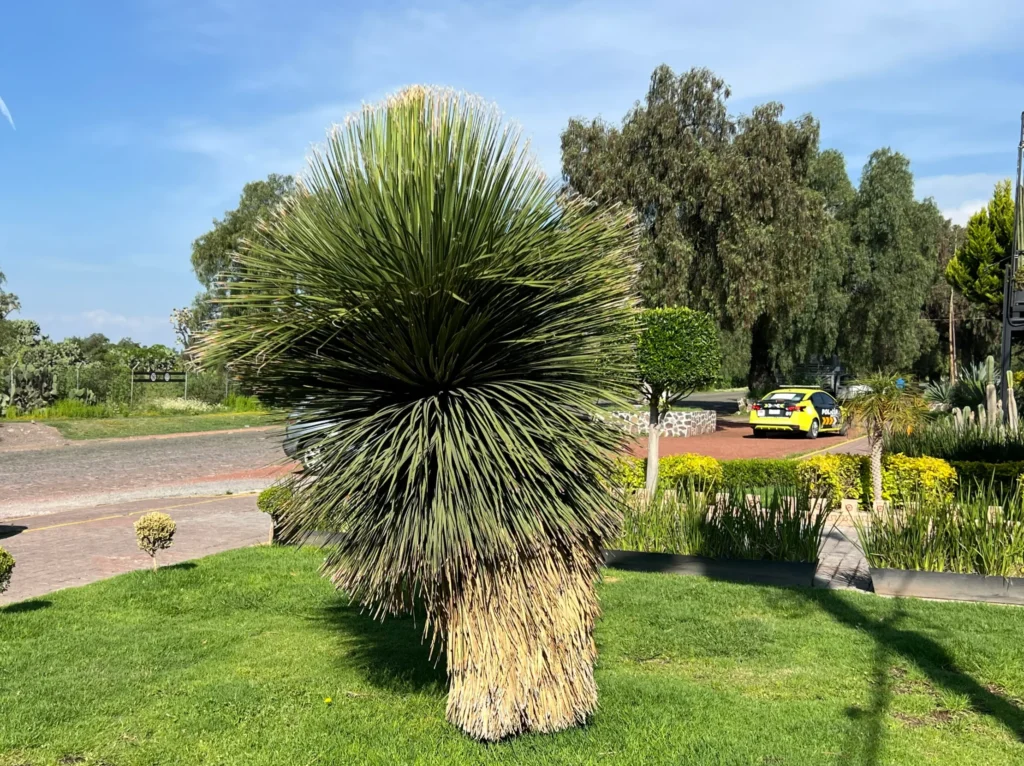
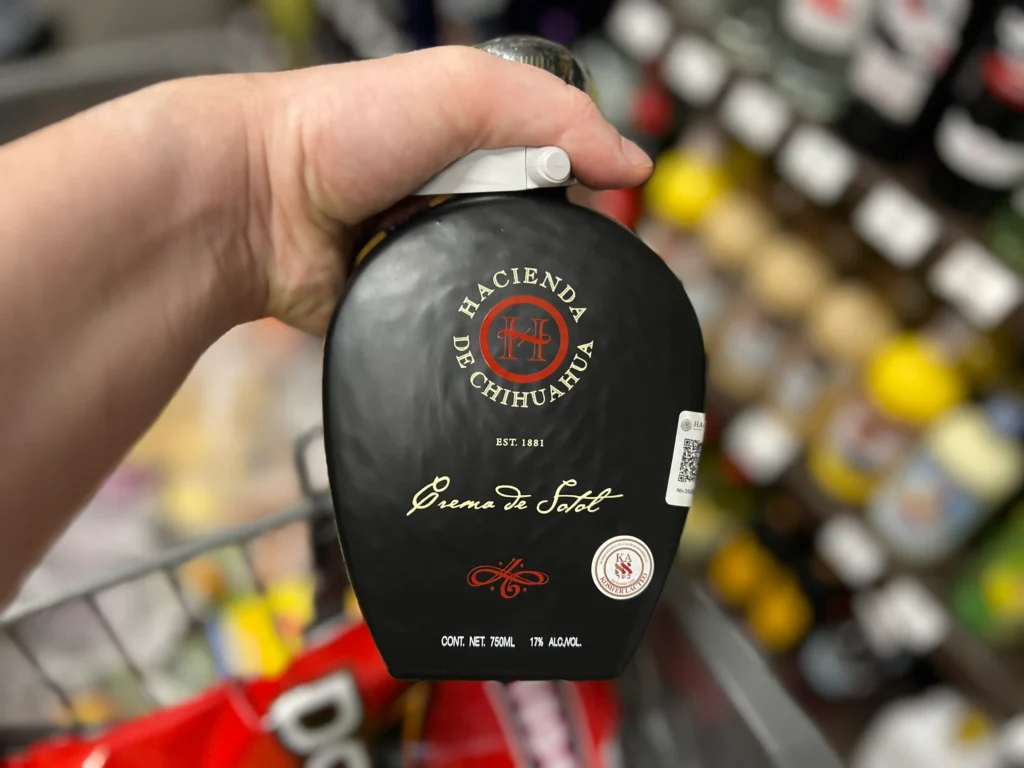
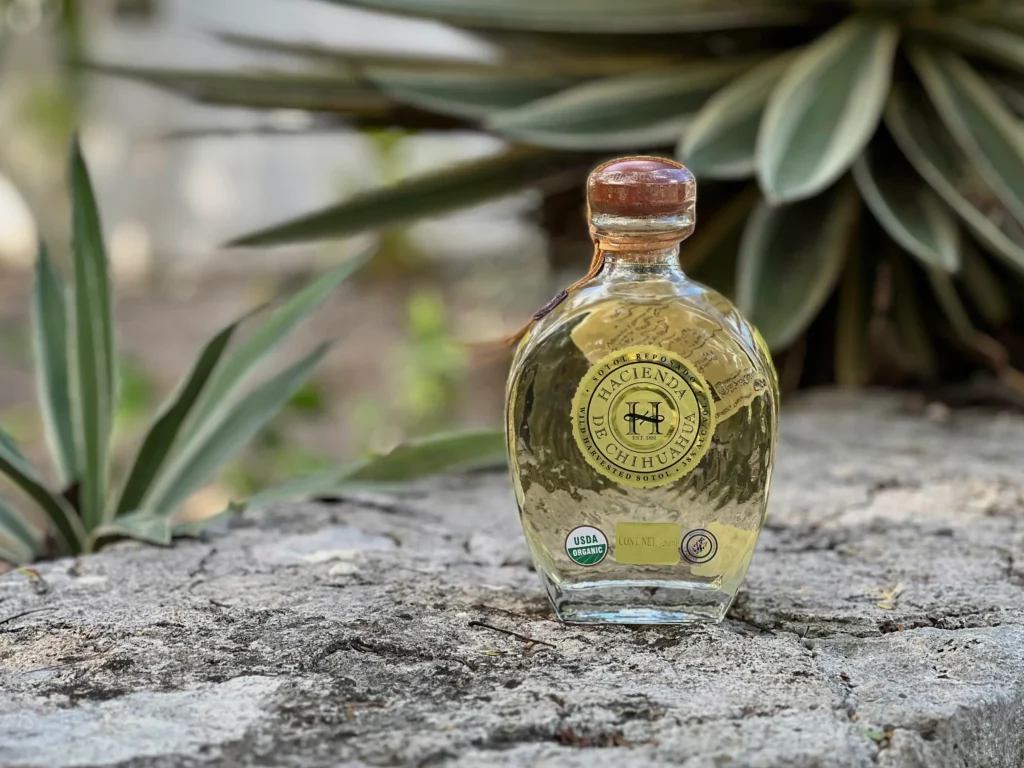
Sotol
Sotol often gets grouped together with tequila and mezcal, but technically it is not an agave spirit. It is made from plants in the Dasylirion genus, which grow in the dry landscapes of northern Mexico. The plant itself is also called sotol, and its long, narrow leaves make it look somewhat agave-like even though it belongs to a different botanical group.
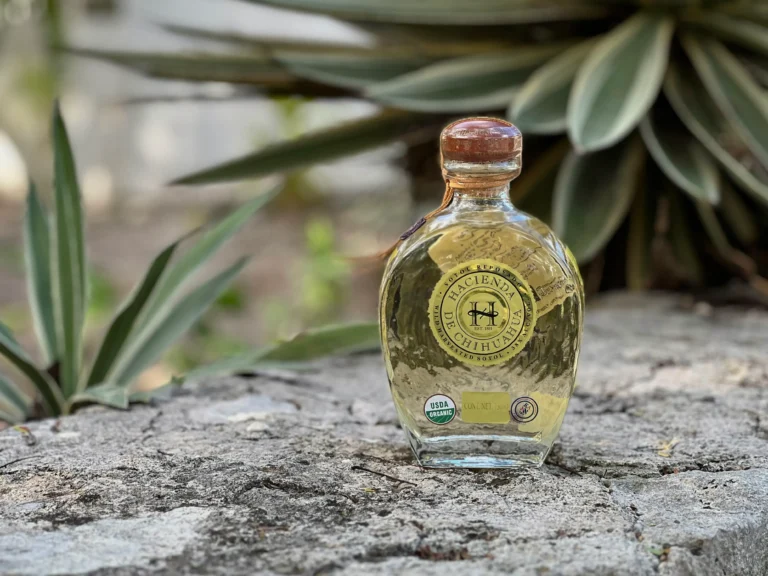
Sotol has had its own Denomination of Origin since 2002, covering production in Chihuahua, Coahuila and Durango. Production starts with the mature hearts of the plant, which are cooked, crushed, fermented and distilled. Depending on the producer and the methods used, the resulting spirit can taste herbal, earthy, grassy or mineral, sometimes with smoky or roasted notes.
Because Dasylirion grows in arid environments, sotol is closely associated with the desert landscapes of northern Mexico. It remains far less internationally famous than tequila or mezcal, but that is part of what makes it interesting to try: it represents a completely different Mexican distilling tradition rather than simply another variation on agave.

Pulque
Pulque is one of Mexico’s oldest traditional alcoholic drinks, and unlike tequila or mezcal, it is fermented rather than distilled.
It is made from aguamiel, the sweet sap collected from mature maguey plants. Instead of harvesting and cooking the whole plant, producers cut into the center of the maguey and repeatedly scrape it so that the aguamiel collects inside. The liquid is then fermented, traditionally with a portion of an earlier batch used to start the process.
The result is very different from an agave spirit. Natural pulque is usually slightly sour and yeasty, with a creamy or somewhat viscous texture and gentle effervescence. It is also much lower in alcohol, typically around 4–7.5% ABV.
Pulque has been consumed in Mexico since pre-Hispanic times and was historically connected with ritual and religious practices. This is also where the old association with Mayahuel, the deity linked to maguey, comes from—but we do not need three separate legends to understand the drink.
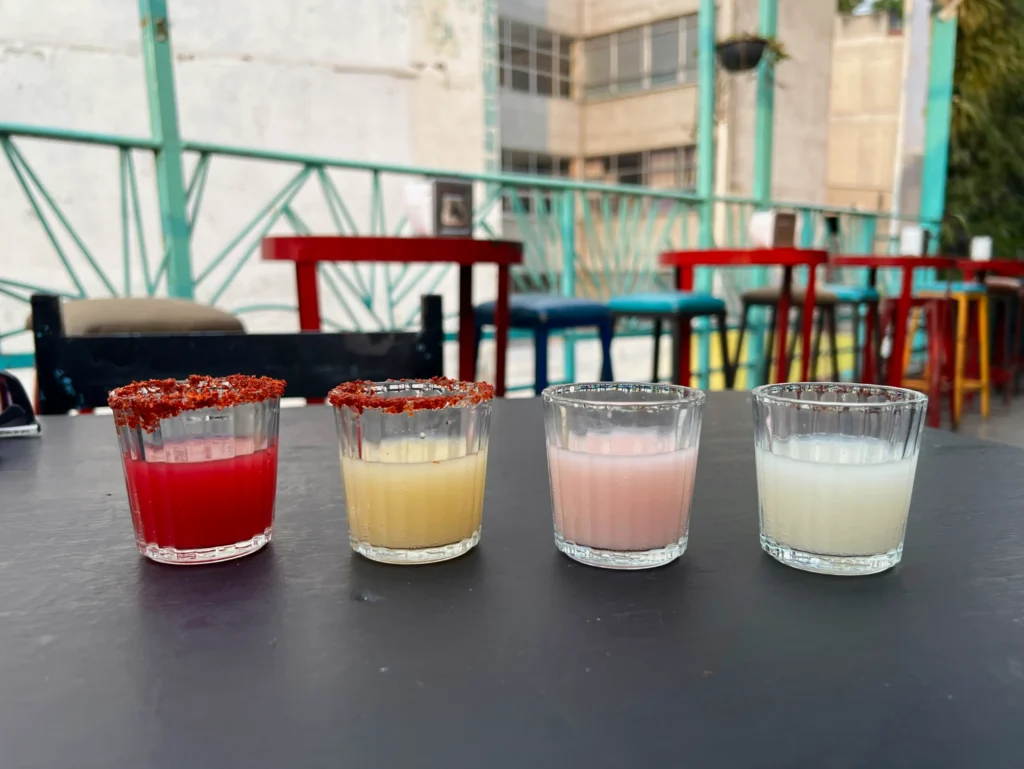
Today you will usually encounter pulque in two forms: natural, served as it comes from fermentation, or curado, where the pulque is flavored with ingredients such as fruit, seeds, grains or other additions.
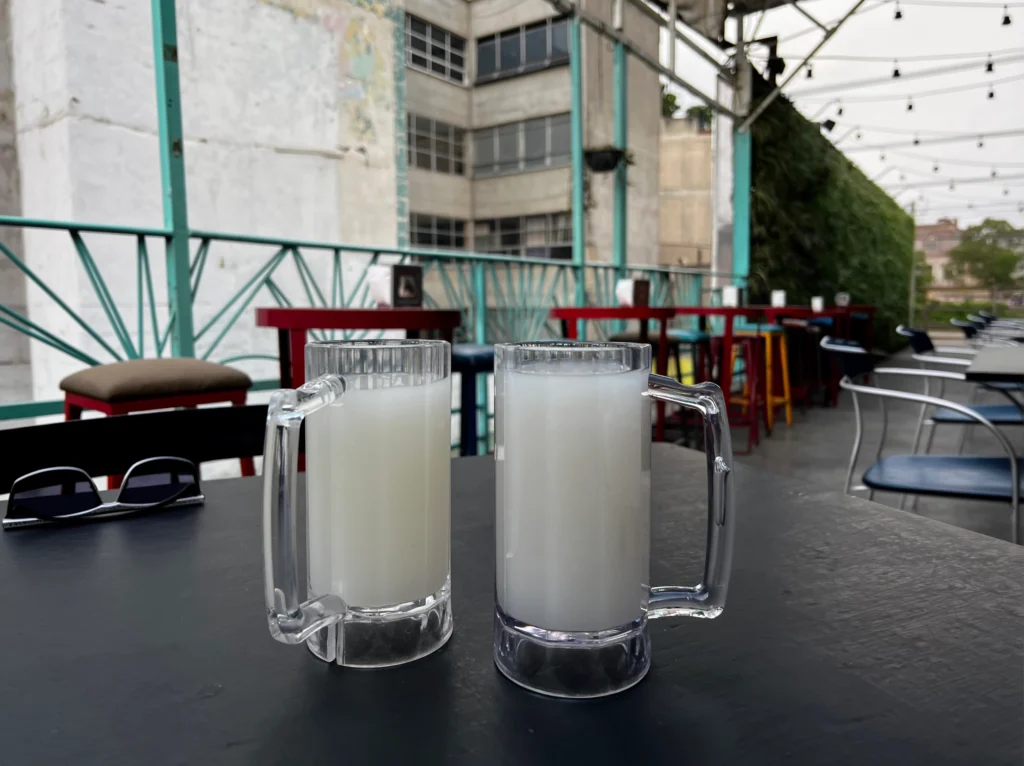
We tried pulque on one of our visits to Mexico City. The photos you see here were taken at Pulquería Los Insurgentes, a wonderfully atmospheric place that also has a solid reputation online. We tried both traditional pulque and several flavored versions, or curados. Personally, we preferred the classic version — but tastes differ, of course. If you find yourself in Mexico City and want to try pulque in a proper pulquería, this is a good place to do it.
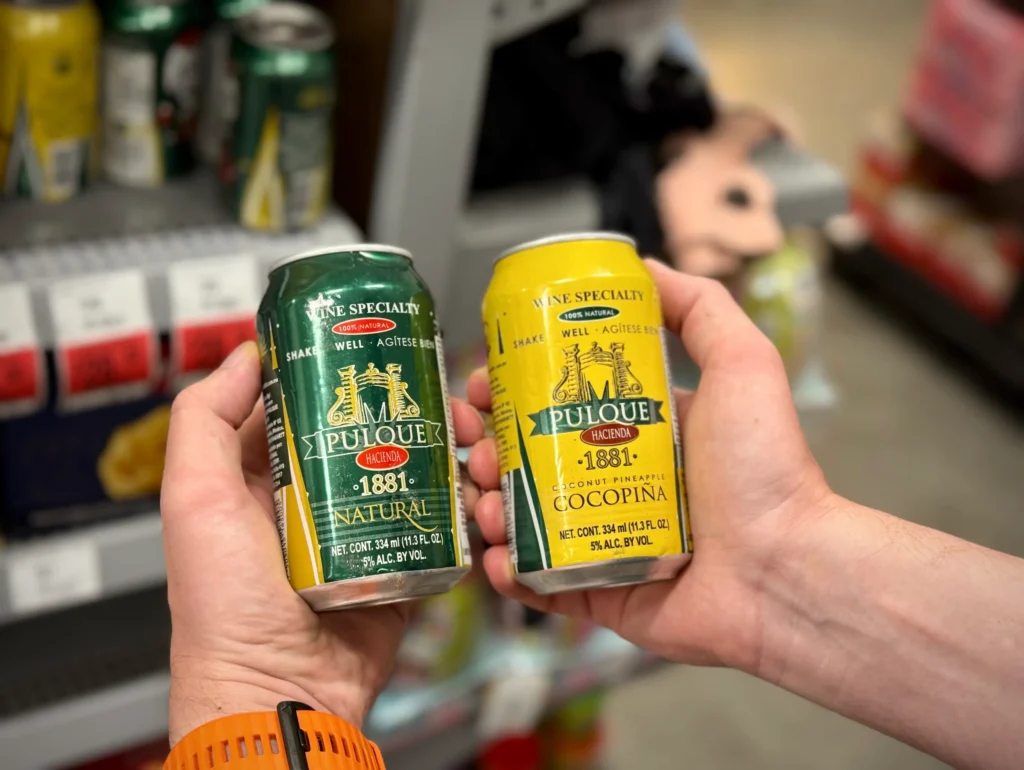
Back home in Cancún, we haven’t managed to find a working pulquería. We did come across old references suggesting that at least one operated here for a while, but it appears not to have lasted. On one occasion, we even found canned pulque in a local supermarket. We took a photo but, admittedly, we weren’t brave enough to try it.
Xtabentún
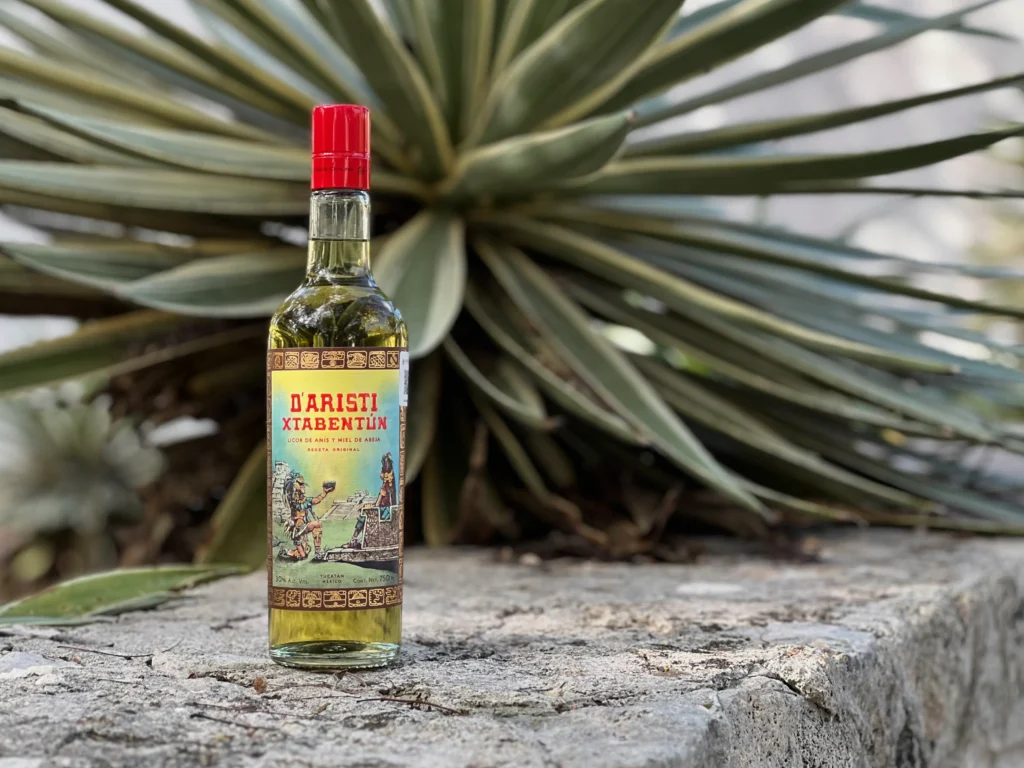
If you are traveling around Yucatán or Quintana Roo, Xtabentún is one of the regional drinks you are most likely to come across.
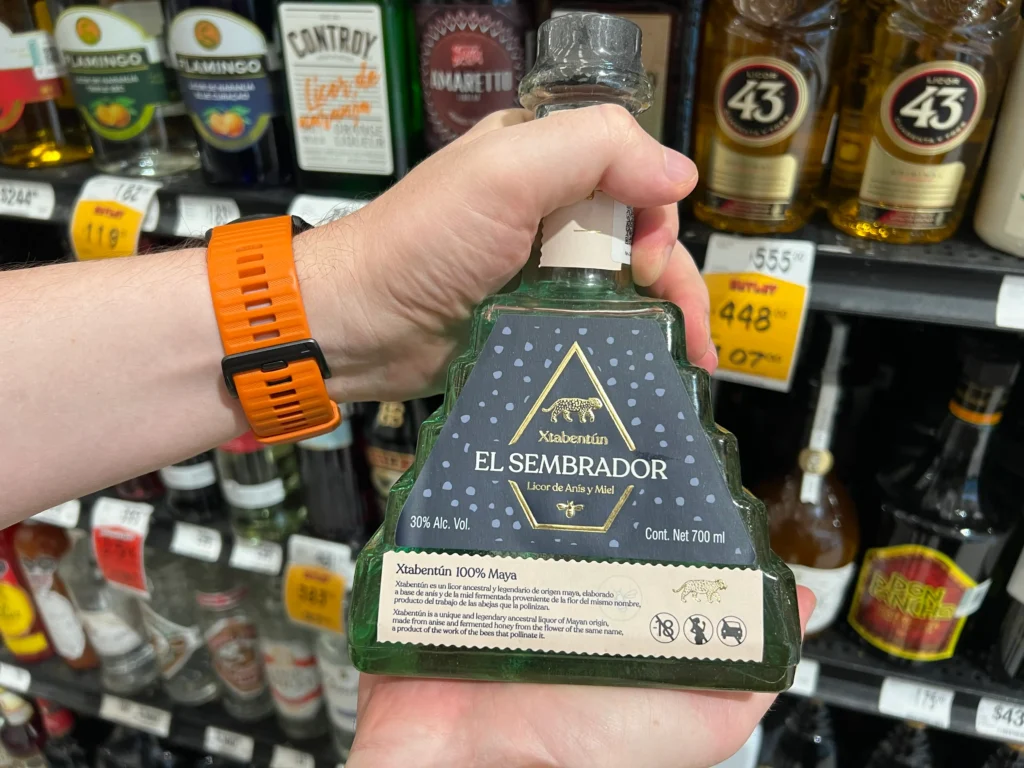
This sweet Yucatecan liqueur is made with honey from bees that feed on the flowers of the xtabentún vine, together with anise. Mexican regulations classify it at 20–30% ABV, so it is considerably gentler than spirits such as tequila or mezcal.
The flavor is distinctive: sweet and floral from the honey, with a noticeable licorice-like note from the anise. It is traditionally served chilled or over ice and is also commonly enjoyed as an aperitif or digestif. The Yucatán government describes it as similar to anisette.
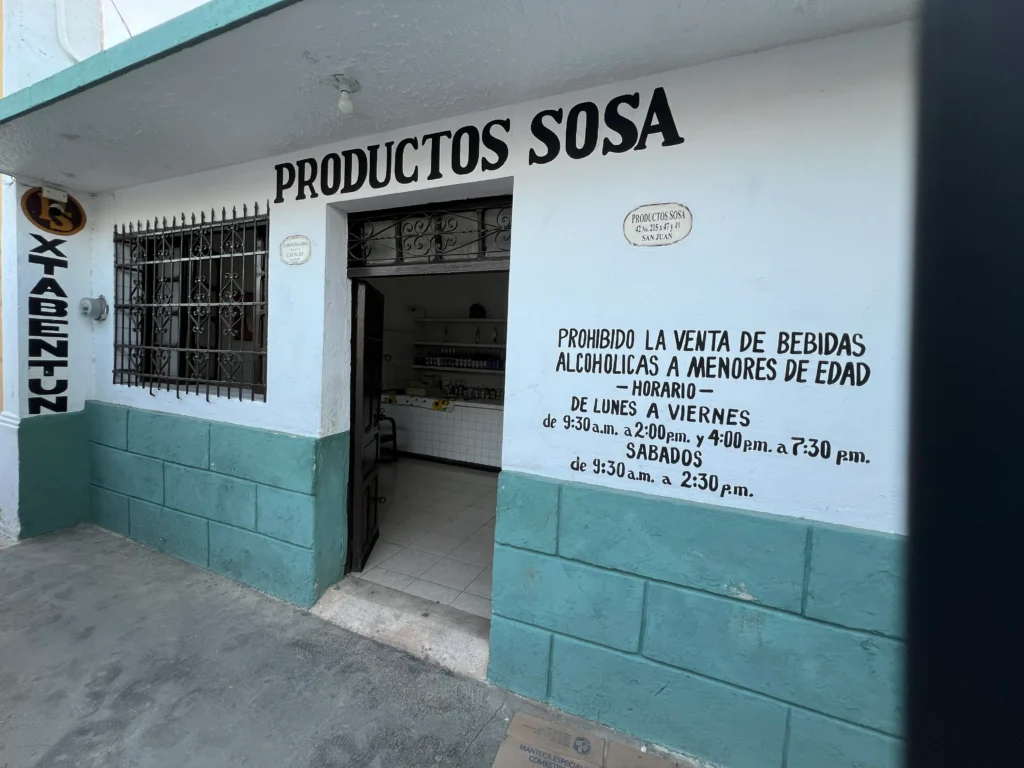
Unlike some of the more obscure regional spirits in this guide, Xtabentún is relatively easy to find around the Yucatán Peninsula. We have seen bottles in ordinary supermarkets in Cancún and Mérida, so you do not necessarily need to visit a specialist liquor store to try it.
If you enjoy sweeter liqueurs, Xtabentún is probably one of the easiest traditional Mexican drinks on this list to approach—and one of the most distinctly Yucatecan.
Pox
Pox—pronounced roughly “posh”—is a traditional distilled drink from the Highlands of Chiapas, particularly associated with Tzotzil and Tzeltal Maya communities.
Unlike tequila or mezcal, pox is not made from agave. Traditional versions are produced using ingredients such as corn, sugarcane or piloncillo, and wheat, which are fermented and then distilled. Recipes and production methods can vary between producers and communities.
Pox also has a cultural role that goes far beyond drinking for pleasure. In communities of the Chiapas Highlands, it has traditionally been used during prayers, healing ceremonies and other rituals, where it can carry spiritual and communal significance.
The spirit itself is usually clear, although flavored versions infused or macerated with herbs and fruit are also produced. Depending on the recipe, pox can have grainy, lightly sweet or vegetal notes, while flavored versions can taste completely different.
Travelers are most likely to encounter pox around San Cristóbal de las Casas and the surrounding Chiapas Highlands, where it remains closely connected with regional identity and Maya traditions.
Other Traditional Fermented Mexican Drinks
Pulque is Mexico’s best-known traditional fermented drink, but it is far from the only one.
Tejuino, associated especially with Jalisco and western Mexico, is made from fermented corn dough, piloncillo, water, salt and lime. It is usually fermented only briefly and is commonly served cold as a refreshing street drink. A related northern drink called tesgüino undergoes a longer fermentation and plays an important ceremonial and social role among Rarámuri communities in Chihuahua.
Then there is tepache. Today it is usually made by fermenting pineapple peel and pulp with piloncillo, water and spices such as cinnamon, although older versions were made from corn. Modern tepache is generally only lightly alcoholic—often around 1% ABV or less—so it sits somewhere between an alcoholic drink and a fermented soft drink.
These drinks are easy to overlook when Mexican alcohol is reduced to tequila and mezcal, but they represent a much older tradition of fermentation based on locally available crops such as corn, agave and fruit.
Which Mexican Drink Should You Try?
Tell us what you like and where you're traveling. We'll match you with a traditional Mexican drink that makes sense for your trip.
What are you looking for?
Step 1 of 3
What Should You Try—or Bring Home—from Quintana Roo?
If you are visiting Cancún, Playa del Carmen or Tulum, it is tempting to assume that buying tequila is part of the “authentic Mexico” experience. Mexico and tequila are closely associated, after all.
But there is an important distinction: tequila is Mexican, but it is not traditionally produced in Quintana Roo. There is no local tequila-making tradition here, because Quintana Roo is outside the protected Tequila Denomination of Origin.
That does not mean you should avoid tequila. We live in Quintana Roo and, if we want a bottle, we buy it the same way many people here do: from a normal supermarket or liquor store. Even Chedraui carries good 100% agave tequilas, while La Europea is a useful option if you want a larger or more premium selection.
Personally, we would be cautious about treating the tequila shops and tasting experiences in heavily touristy areas as the place to find something uniquely local. In our experience, many are primarily designed to sell bottles to tourists, often with a substantial markup.
If your goal is to bring home something that actually has a stronger connection to this part of Mexico, we would look beyond tequila.
Xtabentún would be our first choice. It is a traditional Yucatecan liqueur and is genuinely tied to the Yucatán Peninsula. Pox is another interesting option you may encounter in southeastern Mexico, although it is traditionally from Chiapas rather than Quintana Roo.
So if you want tequila, buy good tequila. But if you want a bottle that reminds you specifically of a trip to Mexico’s Caribbean coast, Xtabentún makes a much more regional souvenir.